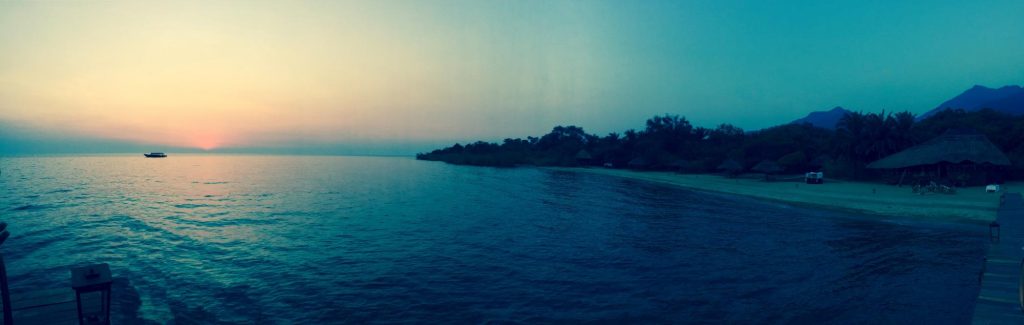
Lake Sunset Panoramas
Lake sunset panoramas at Mahale Mountains National Park are watched from beach camps, boat cruises and mountain ridges facing west across Lake Tanganyika, with the sun dropping towards the Congolese shore roughly forty kilometres out. Camps run sunset boat cruises and beach sundowners daily as part of an inclusive stay. Mahale sits on the eastern shore of the lake in western Tanzania, which puts every camp beach and every ridge viewpoint pointing directly into the evening light.
Park material has described Mahale as a place worth the trip for the sunsets alone, and that is not marketing so much as geometry. There is nothing between you and the horizon except sixty kilometres of the deepest lake in Africa.
Sunset Boat Cruises on Lake Tanganyika
The sunset boat cruise is the standard evening activity at the Mahale camps and is usually included in the rate. Boats leave the beach in the late afternoon, run a little way along the shore, then cut the engine and drift while the light works through its stages.
What makes it different from a sundowner cruise anywhere else is the wall behind you. Turn around and the Mahale range rises straight out of the water to over 2,400 metres, catching the last light on its upper slopes long after the beach has gone into shade. You get two shows, one in each direction, and most people spend the hour swivelling.
Traditional dhows work this coast too, and some camps run the evening trip under sail rather than engine. Slower, quieter and considerably better for photographs, since a sailing boat is a more stable platform than a bobbing tender.
Timing note: Mahale sits close to the equator, so sunset is fast and falls around six thirty in the evening year round with very little seasonal shift. There is no long northern dusk. Be in position twenty minutes early rather than five, because the whole thing is over in about half an hour.
Why Mahale Faces the Sunset
The park occupies the eastern shore of Lake Tanganyika, so west is open water. The lake runs roughly 673 kilometres north to south and reaches about fifty kilometres at its widest, which means the sun sets over water rather than land from almost every viewpoint in the park.
On clear evenings the Congolese highlands on the far shore show as a low dark line under the colour, and in the drier months they can be sharply defined. Haze from seasonal burning in the interior often softens them into nothing, which changes the character of the sunset entirely without spoiling it.
The mountains behind do the other half of the work. Because the range rises so abruptly from the shoreline, the camps sit in shadow well before the sun actually reaches the horizon, and the light on the water in front of you stays bright while you are already in the cool.
Beach Sundowners at the Mahale Camps
The simplest version needs no boat at all. Camps are built directly on white sand facing west, so evening drinks happen on the beach with the fire lit and the lake in front of you.
This is how most guests spend most evenings, and after a hard morning’s chimpanzee trekking safari it is exactly the right pace. Fish eagles call along the shore, baboons work the rocks at the ends of the beach, and the forest behind starts up its evening noise while the water goes from blue to orange to pewter.
Camps here lean into the plainness of it. Driftwood furniture, a fire on the sand, no music, no crowd. There are only a handful of rooms in the whole park, so the beach is genuinely empty.
Ridge Viewpoints on a Nkungwe Trekking Safari
Climbing changes the panorama completely. From the upper slopes and the summit grassland on a Mount Nkungwe trek, at around 2,462 metres, the view runs west across the full width of the lake with the park’s forested spurs falling away below.
Sunsets from up there put you above the shadow line, so you keep the light long after the camps have lost it. Clear dry season evenings give the sharpest conditions and the best shot at seeing the far shore properly. Cloud sitting on the summit is common in wetter months, in which case you see nothing at all and go to bed early.
The climb takes two or three days with camping and rangers, so this is not a viewpoint you drop in on. Trekking parties who make the effort usually rate the evening at the high camp above the summit itself.
From the ridge you are looking down on the whole park at once: forest, beach, and sixty kilometres of open water going gold.
The Fishing Lamps After Dark
The part nobody warns you about comes after the sunset finishes.
As dusk settles, fishing crews put out from villages up and down the shoreline in small wooden boats hung with kerosene lamps, drawing sardines up towards the light. Within an hour the dark water carries scattered points of light spread out towards the horizon, and it keeps going all night. From a beach chair it reads like a town assembling itself on the lake and dismantling itself before breakfast.
Seen from the mountain, the effect is stranger still, since you are looking down on the fleet from above. Local guides refer to it as the fishing fire, and it is one of the reasons camping high on Nkungwe is worth the effort.
These are working boats, not a display. The lake supports fishing communities along its whole length, and the offshore sardine and Lates fishery is what those lamps are chasing.
Photography on a Mahale Sunset Tour
A few practical things, since photographers are a large share of the people who come here for the light.
From the beach
Foreground is the problem, since the sand is featureless. Use the camp dhows, a fishing boat, the rocky headlands or the fire. Shooting low from the sand puts the mountains in the frame behind you if you turn around.
From a boat
Better angles on the mountains catching the last light, but a moving platform. Ask for the sailing dhow rather than a tender if stability matters, and push your shutter speed higher than you think you need.
From the ridge
The wide panorama, and the only place you get the lake, forest and far shore in one frame. Needs the Nkungwe climb and a clear dry season evening.
After dark
The fishing lamps want a tripod and a long exposure. Camps will not mind you setting up on the beach. Skies here are very dark, so the stars come into the same frame.
Dry season air is hazier than you might expect because of burning inland, which mutes the far shore but strengthens the colour. Green season evenings are clearer between showers and often more dramatic overhead.
Storm Skies and Green Season Sunset Watching
From November onwards the sunsets change character. Short rains bring cloud structure that the dry months lack, and the same beach that gave you a clean orange horizon in September starts producing towering build-ups over the Congo side.
Electrical storms out over the lake are a green season feature, lighting the whole water surface in bursts at night. Park material describes this as one of the arguments for a wet season visit, alongside the emptiness. You watch from under cover with a drink and it is a completely different evening from a dry season one.
Between March and May the long rains close most camps in the park, so the storm season runs November to February for visitors.
Best Months for Lake Sunset Panoramas at Mahale
June to October gives the most reliable clear evenings, settled water for boat cruises and the highest chance of good conditions on a mountain ridge. August through October also happens to be the strongest window for chimpanzee sightings, so the two line up neatly.
November and December bring softer visitor numbers and far more dramatic skies, with the trade-off of showers that can cancel a boat trip. January and February sit between the rains and often deliver both. March to May is the closure period, when most camps shut and the scheduled flights stop.
Getting to Mahale for Lake Sunset Trips
Mahale is reached by air or water only, with no roads inside the park. Most visitors fly Dar es Salaam to Kigoma in around three hours, then continue south by light aircraft in about forty five minutes or by speedboat in four to six hours. Timber boats take fifteen hours or more, and the lake steamer calls at Lagosa, also known as Mgambo.
Fly-in guests use scheduled charters that typically run Mondays and Thursdays in season from Arusha and the northern circuit, often via Katavi, landing at an airstrip near the park boundary and transferring by boat for roughly an hour and a half along the shore. Arrive on an afternoon flight and your first sunset happens on that transfer, which is not a bad introduction. If you want beach time after the forest, our 7 day Mahale chimps and beach safari is built around exactly that.
Lake Sunsets at Mahale: Frequently Asked Questions
Is the sunset boat cruise included in a Mahale safari?
Usually yes. The lakeshore camps typically include a boat safari during your stay along with kayaking and snorkelling, and evening cruises are part of the standard offering. Private charters of the boat or dhow for a specific evening are sometimes charged as an extra. Camp rates start from around US$1,500 per person per night at the premium end and are otherwise fully inclusive of meals, most drinks and transfers.
What does it cost to stay at Mahale for the lake views?
On top of camp rates, non-resident adults pay a park conservation fee of roughly US$80 to US$95 per person per day depending on whether VAT is shown, plus an overnight concession levy of about US$35 per adult per night inside the park. The chimpanzee trekking permit is separate again at around US$150 per person. Camps usually fold the park charges into their quoted rate, so ask what is included before comparing figures. East African citizens pay considerably lower entry fees.
What time does the sun set at Mahale?
Around six thirty in the evening, with very little variation through the year given how close the park is to the equator. Dusk is short, so the whole sequence from first colour to full dark runs about forty minutes. Camps time drinks and boat departures around it.
Can you see the Democratic Republic of Congo from Mahale?
On clear days, yes. The Congolese shore lies roughly forty to fifty kilometres west across the lake and shows as a low line of highlands under the sunset. Haze from inland burning often obscures it during the dry season, and it is usually sharpest after rain has cleared the air.
What are the fishing lamps you see at night on the lake?
Local fishing crews working the sardine fishery. They go out after dark in small wooden boats hung with kerosene lamps, which draw the fish up towards the surface. Spread across the water they look like a floating town, and they work through the night. The lake supports fishing communities along its entire length, so this is livelihood rather than spectacle.
Which month gives the best sunsets at Mahale?
June to October for clear, reliable evenings and settled water. November to February for dramatic cloud, storms over the lake and lightning at night. Both are worth it for different reasons. Most camps close from March to May during the long rains, so those months are not an option.
Do I need to climb Nkungwe for the best panorama?
No, though the ridge view is the widest one available. The beaches face west across open water and give you the sunset without any effort at all, and the boat cruise adds the mountains catching the last light behind you. The Nkungwe climb takes two to three days with camping and rangers, so it suits people who want the mountain for its own sake rather than purely for the view.
Booking Your Mahale Trip
The safari companies and tour operators listed on this website put trips like this together for a living and know which camps, guides and routes actually deliver. We are an independent guide to Mahale; we do not book or sell tours ourselves.
When you are ready, arrange your safari, tour or holiday with one of the recognised operators listed here. Tell them your dates and what matters most, and a real person, not a form, will handle the itinerary, park bookings and logistics for you.