What Are the Top Reasons to Visit Mahale?
The top reasons to visit Mahale are trekking the habituated M group chimpanzees, swimming and snorkelling in Lake Tanganyika the same afternoon, walking a park with no roads and almost no other visitors, climbing Mount Nkungwe, and watching the sun set west across open water. A Mahale chimpanzee trekking safari combines forest and beach in a way few destinations manage. Mahale Mountains National Park lies on the eastern shore of Lake Tanganyika in western Tanzania.
Reaching it takes effort and money. What follows is an honest account of what you get in return, including the things that will not suit everyone.
Trekking the Best Studied Chimpanzees in Africa
The reason most people come, and it holds up.
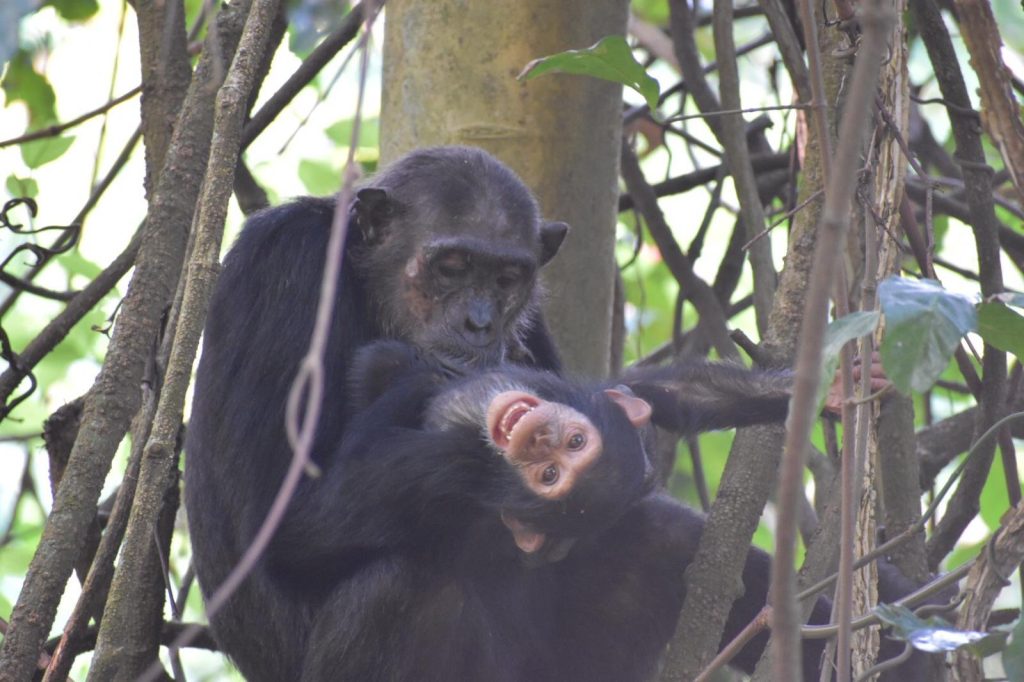
Mahale holds roughly 700 to 1,000 eastern chimpanzees, described by Tanzania National Parks as the largest protected population of the subspecies anywhere. The habituated M group, or Mimikire clan, has been studied continuously since 1968 under a project that began at Kansyana in 1965, and specialist operators regularly describe the chimpanzee viewing here as the best in the world.
What that means on the ground is a group of sixty to seventy five animals that has tolerated human observers for over half a century, tracked daily by people who know them individually by name. Guides will tell you which male is currently pressing for rank and which infant belongs to which mother. Very few wildlife experiences anywhere come with that depth of context.
Sightings are strong and not guaranteed. Two or three trekking mornings improve the odds considerably.
Who this park suits: people who enjoy walking, tolerate heat and humidity, and want solitude more than convenience. People who want game viewing from a vehicle, easy access or a certain sighting will find better value elsewhere. Being honest about which you are saves a considerable amount of money.
Forest in the Morning, Lake in the Afternoon
The combination is what people remember, and it is close to unique.
Camps sit directly on white sand beaches with rainforest behind and mountains stacked above. Trekking happens early, when the chimpanzees are active and the forest is cooler. By early afternoon you are back at the beach, and the lake is warm enough to walk straight into after four hours on a humid slope.
Water sits near 25 degrees Celsius year round. It is fresh rather than salt, so there is no rinse afterwards. Camps include kayaking, snorkelling equipment and a boat safari in the rate, and traditional dhows sail this coast for evening trips.
Very few places on the continent let you do serious primate trekking and swim before lunch. Fewer still let you do it with nobody else on the beach.
A National Park With No Roads and Almost No Visitors
This is the structural reason Mahale feels different, rather than a marketing line.
There are no roads inside the park and none within about sixty kilometres of the camps. No game drives, no vehicles, no convoy at a sighting. Access is by light aircraft to an airstrip near the boundary followed by a boat, or by lake transport from Kigoma, and every supply arrives the same way.
The whole park sleeps fewer than forty people across two camps and some simple park accommodation, in an area of roughly 1,600 square kilometres. Annual visitor numbers run in the low thousands. You will not queue for anything, share a trail, or see another group at the chimpanzees.
The same constraint is what makes it expensive and awkward to reach. The two facts are the same fact.
Snorkelling Over the Cichlids of Lake Tanganyika
An underrated reason, and one most visitors do not expect.
Lake Tanganyika is the world’s longest freshwater lake and the second deepest at 1,470 metres, somewhere between nine and thirteen million years old. It holds more than 250 described cichlid species with roughly 98 percent found nowhere else, plus around 75 non-cichlid species with a high rate of endemism.
Twenty metres off the camp beaches the bottom turns to rock, and that is where the fish are: shell dwellers living in beds of empty snail shells, rock-grazing species working the algae film, gobies in crevices. Dry season visibility can reach around twenty metres. Masks and fins come with the room.
Almost nobody snorkels freshwater cichlids in the wild. Here it is a casual afternoon activity.
The chimpanzees
A community habituated since 1968 in the largest protected population of eastern chimpanzees anywhere, tracked by guides who know them by name.
The beaches
White sand coves between rocky headlands with forest to the waterline, and warm fresh water to swim in after every trek.
The solitude
Fewer than forty beds in 1,600 square kilometres, no roads, and visitor numbers in the low thousands a year.
The mountain
Mount Nkungwe at roughly 2,462 metres, climbed over two or three days through five vegetation belts with camping and rangers.
The lake life
Over 250 endemic cichlid species snorkelled straight off the sand, in water near 25 degrees Celsius year round.
The sunsets
West across open water towards the Congo, followed after dark by the kerosene lamps of the fishing fleet spreading across the lake.
Climbing Mount Nkungwe
For walkers, the mountain is a reason in itself rather than an add-on.
Nkungwe tops the Mahale range at roughly 2,462 metres, with six further peaks above 2,000 metres alongside it. The climb takes two or three days from near Kansyana or park headquarters, gaining close to 1,700 metres from the lakeshore, with camping and an armed ranger.
The route passes through lowland forest, montane forest, alpine bamboo and out into montane grassland above about 2,300 metres. From the ridge the view runs west across the full width of Lake Tanganyika to the Congolese highlands on clear days. The peak is sacred to the Tongwe people who lived in these mountains before the park was gazetted in 1985.
Nights on the mountain look down on the fishing lamps working the lake below, which several trekking parties rate above the summit itself.
You do not come to Mahale for convenience. You come because almost nowhere else asks you to walk this hard for something this good.
Sunsets and the Fishing Lamps at Night
Park material describes Mahale as worth visiting for its sunsets alone, which sounds like promotion until you understand the geometry.
The park occupies the eastern shore, so west is forty to fifty kilometres of open water with the Congolese highlands beyond. Every camp beach faces into it. Sunset falls around six thirty year round given the proximity to the equator, and dusk is short.
Then the second act. Fishing crews put out from villages along the shore in small wooden boats hung with kerosene lamps, drawing sardines towards the light, and the dark water fills with points of light out to the horizon. It runs all night and is gone by breakfast. In the green season, electrical storms over the lake take its place.
Nine or Ten Primate Species in One Forest
Beyond the chimpanzees, Mahale carries one of the densest primate communities in Tanzania.
Red colobus live in the lower valley forest and are hunted by the chimpanzees, a behaviour documented here in detail. Angolan black and white colobus occupy the montane band as a race found only in these mountains. Red-tailed monkeys, blue monkeys, vervets and yellow baboons fill out the rest, with baboons working the beaches daily.
Counts vary between eight and ten species depending on the source and how nocturnal galagos are treated. On any guided walk something is usually moving overhead.
Reasons Not to Come
Worth saying, since the whole point of an honest list is the entries that do not flatter.
Trekking here is rated among the more strenuous primate walks in Africa, on steep humid slopes with open-ended distances. There is no game viewing in the conventional sense, no vehicles and no plains. Lions, elephant and buffalo are on the species list and rarely seen. The cost of access is high and the flight days dictate how long you stay. Most camps close from March to May.
If any of that is a problem, Katavi on the same flight rotation gives you savanna and big mammals, and Gombe north of Kigoma gives you chimpanzees for far less money and effort.
Best Time to Visit and Getting to Mahale
June to October is the dry season and the main window, with August through October strongest for chimpanzee sightings as the group ranges low. November to February is quieter, greener and better for birds, at the cost of longer treks. Most camps close from March to May. Our 9 day Mahale, Serengeti and Crater safari pairs the chimpanzees with the classic northern circuit.
Access is by air or water only. Scheduled charters run from Arusha on set days in season, typically Mondays and Thursdays, often via Katavi, landing near the boundary with a boat transfer of around ninety minutes. The alternative flies Dar es Salaam to Kigoma in roughly three hours, then continues south by light aircraft in forty five minutes or by speedboat in four to six hours.
Reasons to Visit Mahale: Frequently Asked Questions
Is Mahale worth the cost?
For the right traveller, yes. Fly-in packages of three or four nights commonly run US$5,000 to US$8,000 per person including flights, meals, park fees and daily trekking. What you get is the largest protected population of eastern chimpanzees, a roadless park with fewer than forty beds, and a lake to swim in. For travellers who want easy access or vehicle-based game viewing, the same money goes considerably further elsewhere.
What is the single best reason to visit Mahale?
The chimpanzee trekking, in a community habituated since 1968 and studied continuously since 1965, guided by trackers who know the animals individually. Specialist operators frequently describe it as the best chimpanzee viewing in the world. The lake and the solitude are what make people stay longer than they planned.
Is Mahale good for a first safari?
Not usually on its own. It has no vehicles, no plains and none of the classic savanna wildlife most first-time visitors picture. It works well as a second leg alongside a northern circuit safari or Katavi, which sits on the same flight rotation and delivers big mammals.
Can you combine Mahale with a beach holiday?
You already are. The camps sit on white sand with warm fresh water for swimming and snorkelling, so the beach element is built in. Travellers who also want the Indian Ocean commonly add Zanzibar at the end, which behaves like an ordinary beach holiday and dilutes the daily average cost of the whole trip.
How many days do I need to make it worthwhile?
Three nights minimum, giving two or three trekking mornings, with four or five better. Adding the Mount Nkungwe climb pushes you to five or six nights, since the mountain alone takes two to three days. Because flights dominate the cost, extra nights are proportionally cheap.
Will I see chimpanzees if I go?
Probably, not certainly. Operators report most guests see them at least once in a three or four day stay, while being clear that sightings cannot be guaranteed in an unfenced wild population. Odds are strongest from August to October when the group ranges on the lower slopes near the camps.
Is Mahale suitable for people who do not enjoy hard walking?
Partly. Chimpanzee treks are demanding and open-ended, but shorter guided forest walks along the stream valleys are gentler and still produce colobus, guenons, baboons and birds. The lake activities need no walking at all. Be candid with your camp about what you can manage and they will plan around it.
Booking Your Mahale Trip
The safari companies and tour operators listed on this website put trips like this together for a living and know which camps, guides and routes actually deliver. We are an independent guide to Mahale; we do not book or sell tours ourselves.
When you are ready, arrange your safari, tour or holiday with one of the recognised operators listed here. Tell them your dates and what matters most, and a real person, not a form, will handle the itinerary, park bookings and logistics for you.