What Makes Mahale Unique?
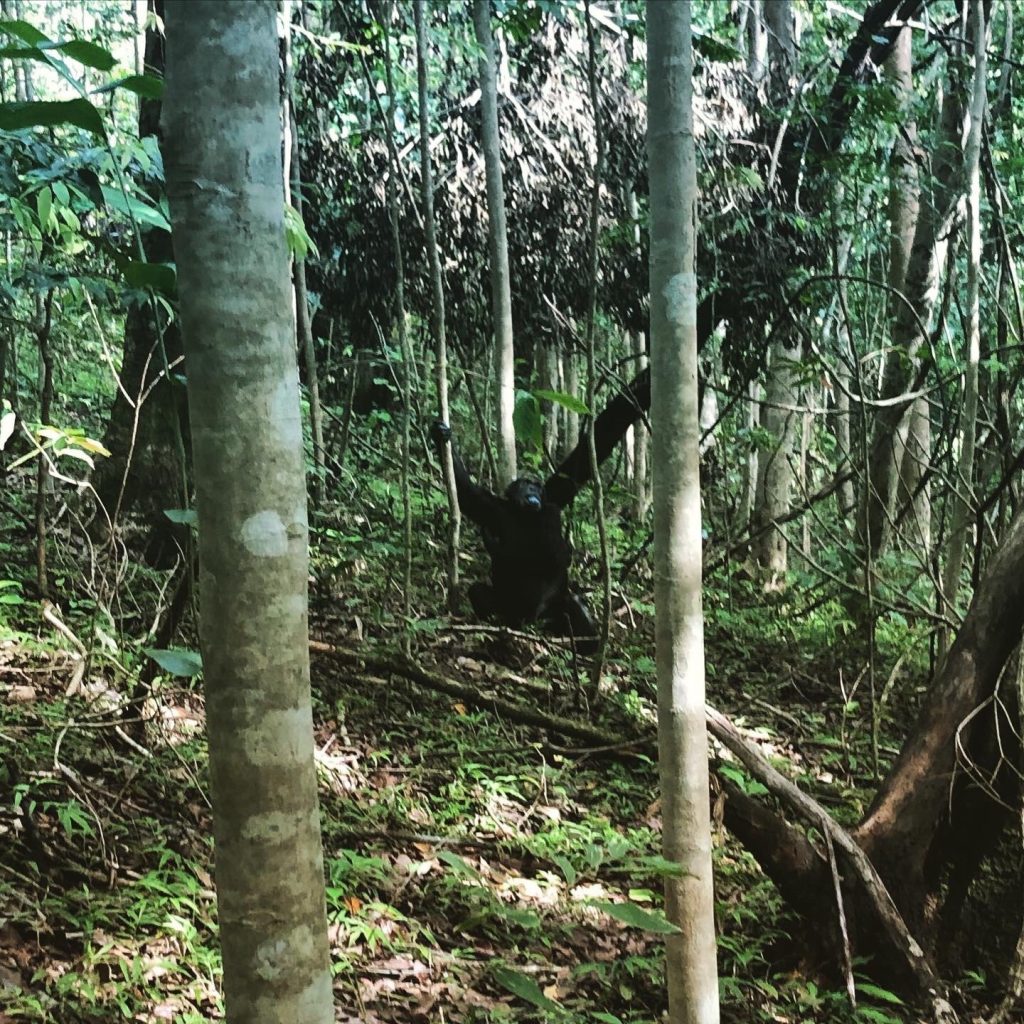
Mahale is unique because it holds the largest protected population of eastern chimpanzees on earth, has no roads at all, and is the only place where chimpanzees and lions share the same forest, all set between white sand beaches and a mountain range topping 2,400 metres. Visitors come for chimpanzee trekking safaris and stay for the lake. Mahale Mountains National Park sits on the eastern shore of Lake Tanganyika in western Tanzania and was gazetted in 1985.
Plenty of African parks are described as different. Mahale actually is, and the differences are structural rather than cosmetic: no vehicles, one habituated chimpanzee community studied since the sixties, and a lake so old it functions as its own evolutionary laboratory.
The Largest Protected Population of Eastern Chimpanzees
Park authorities put the chimpanzee population at roughly 700 to 1,000 animals of the eastern subspecies, Pan troglodytes schweinfurthii, and describe it as the largest protected population of that subspecies anywhere.
Scale matters for what you actually see. Gombe Stream, the country’s other chimpanzee park and the more famous one, covers about 35 square kilometres and holds around 95 chimps. Mahale runs to roughly 1,600 square kilometres. The animals here have room, and the population is not squeezed against its boundaries in the way smaller sites are.
One community, the M group or Mimikire clan, is habituated for visitors and numbers somewhere around sixty to seventy five individuals. Everything else in the park lives unvisited, which is part of why the population is in the state it is.
A National Park With No Roads at All
This is the detail that changes everything else. There are no roads inside Mahale and none within about sixty kilometres of the lakeside camps.
No game drives, no vehicles, no dust, no convoy of Land Cruisers at a sighting. Every activity happens on foot or by boat, which means the park is quiet in a way that few protected areas manage, and it means visitors are physically committed in a way a game drive never asks for. You walk, or you do not go.
Access follows the same logic. The only way in is by light aircraft to an airstrip near the boundary followed by a boat, or by lake transport from Kigoma. Supplies for the camps come the same way. That constraint has kept annual visitor numbers in the low thousands, which is a rounding error next to the Serengeti.
What the absence of roads actually means for you: a chimpanzee trek here is rated among the more strenuous primate walks in Africa. Steep, humid, often trackless ground, with the length of the walk decided by where the apes are that morning. This is a walking destination first and a wildlife destination second.
Where Chimpanzees and Lions Share One Forest
Mahale is regularly described as the only place in Africa where chimpanzees and lions coexist, and researchers documented lions as a genuine predator of chimpanzees here in 1989. Conservation groups also describe these mountains as the one place you find chimpanzees and savanna elephants together.
The reason is biogeographic. Mahale sits at a meeting point between two faunal worlds, and the researcher Hiroshi Ihobe described its fauna as including both savanna-adapted species of eastern and southern Africa and forest-adapted species of western and central Africa and the Congo basin.
Practically, that means roan and sable antelope on the drier eastern flank, buffalo in the grassland, red colobus in the western rainforest, and a chimpanzee community with a predator that no other study site has to think about. Lion sightings by visitors are rare, and the armed ranger who walks with your trekking party is not a formality.
Sixty Years of Continuous Chimpanzee Research
The study at Mahale is one of the longest continuous field projects on any wild mammal, and it predates the national park by twenty years.
Junichiro Itani of Kyoto University began primate work in western Tanzania in 1961. His student Toshisada Nishida succeeded in habituating chimpanzees at Kansyana in 1965, working with the K group from 1966 and the M group from 1968, and directed the project until 2011. The researchers’ action plan fed directly into the gazetting of the park in 1985, and provisioning was stopped altogether in 1987 once the animals no longer needed food to tolerate observers.
What that means on a trek is that guides know individuals by name, by mother, by rank history. The alpha male politics of the M group are documented across decades: Ntologi took the top position in 1979 and held it into the nineties, interrupted by Kalunde in 1991 and displaced for good in 1995. Very few places on earth can tell you that about the animals in front of you.
Forest Trekking and White Sand Beaches in One Park
The combination is genuinely unusual. Camps sit directly on fine pale sand between rocky headlands, with forest coming down almost to the waterline and the mountains stacked behind.
Days here split cleanly. Trekking in the morning, when the chimps are active and the forest is cooler. Then back to the beach, into water that holds near 25 degrees year round, with snorkelling, kayaking, dhow sailing and boat safaris filling the afternoon. Camps include most of that in the rate.
Very few parks let you do serious primate trekking and then swim before lunch. Even fewer let you do it with nobody else on the beach.
Chimpanzees in the morning, the second deepest lake on earth in the afternoon, and a handful of rooms in sixteen hundred square kilometres.
The Habitat Mosaic From Lakeshore to Montane Grassland
Park material describes Mahale as a mosaic of overlapping rainforest, woodland, bamboo forest, montane forest and mountain grassland, and that layering is what allows such a mixture of species in one protected area.
Lakeshore and riverine forest
Tall closed canopy from the beaches upward, cut by steep streams draining the western slope. Where the chimpanzees range in the dry months.
Montane forest
Cooler and mossier through the middle slopes. Home to the Angolan black and white colobus, which occurs here as a race found nowhere else.
Alpine bamboo
Dense stands on the upper slopes, atmospheric and hard going, crossed on the way to the summit.
Montane grassland
Open ground above roughly 2,300 metres on Mount Nkungwe, which tops out around 2,462 metres.
Miombo woodland
Beyond the ridge on the drier eastern flank, where the park stops resembling a rainforest and the savanna species take over.
All of that stacks into under 1,700 metres of vertical distance from the lake surface to the summit, which is why the biodiversity here punches so far above the park’s size.
Endemic Fish of Lake Tanganyika on the Doorstep
The park’s western boundary is one of the strangest bodies of fresh water on the planet, and you can snorkel it straight off the camp beaches.
Lake Tanganyika is the world’s longest freshwater lake and the second deepest after Baikal, running about 673 kilometres and dropping to 1,470 metres. Estimates put its age between nine and thirteen million years. It holds more than 250 described cichlid species, roughly 98 percent of them found nowhere else, plus around 75 non-cichlid species with a high rate of endemism.
Conservation organisations describe it as the last of Africa’s great lakes still close to its natural state. Dry season visibility over the rocky shallows can reach twenty metres, and the small colourful species that snorkellers see are the same ones that have made this lake a reference point in evolutionary biology.
Chimpanzee Culture: Ant Fishing and Self-Medication
Mahale’s contribution to primatology is not one headline finding but a long accumulation of behaviours documented nowhere else first.
Ant fishing is the signature. M group chimps strip a stem, work it into an arboreal ant nest and draw the insects out, using a technique that differs in detail from tool use at other study sites, which is part of the evidence for genuine cultural variation between chimpanzee communities. Hunting and meat sharing, including the hunting of the red colobus that live in the same forest, were worked out in detail here.
The self-medication finding travels furthest. In 1987 researchers documented sick chimps chewing the pith of a bitter plant, Vernonia amygdalina, that they otherwise avoid, and later analysis found compounds active against the parasites those animals were carrying. Grooming hand-clasp postures, vocal repertoire, night bed-making and laterality of hand use have all been catalogued from this single site.
How Mahale Compares With Gombe
The two Tanzanian chimpanzee parks get compared constantly, and they are less alike than the shared species suggests.
Gombe is small, around 35 square kilometres of forest strip north of Kigoma, holds roughly 95 chimpanzees, is reached by a short boat ride from town, and carries the higher park entry fee of the two even at that size. It is where Jane Goodall’s work began, and the historical weight of that is the reason most people know the name.
Mahale is roughly forty five times larger, holds many times the chimpanzee population, is far harder and more expensive to reach, and adds mountains, beaches and a lake. Trekking here is more demanding. Sightings are strong but never promised in either park. If the history is what draws you, Gombe. If the forest and the scale are, Mahale.
Getting to Mahale Mountains National Park
Access is by air or water only. Scheduled charters run from Arusha and the northern circuit on set days in season, typically Mondays and Thursdays, often calling at Katavi, landing at an airstrip near the park boundary followed by a boat transfer of roughly ninety minutes. If you want to see how the days fit together, our 3 day Mahale chimpanzee safari shows the shortest workable shape of the trip.
The cheaper route flies Dar es Salaam to Kigoma in about three hours, then continues south by light aircraft in forty five minutes or by speedboat in four to six hours. Most camps close from March to May during the long rains and the scheduled flights stop with them, so the practical season runs June to February.
What Makes Mahale Different: Frequently Asked Questions
Why is Mahale so expensive to visit?
Access and scarcity. Charter flights are priced per aircraft rather than per seat, only a handful of rooms exist in the whole park, and every supply arrives by boat or plane. Fly-in packages of three or four nights commonly run between about US$5,000 and US$8,000 per person all in. Park charges add roughly US$80 to US$95 per non-resident adult per day depending on VAT treatment, about US$35 per adult per night concession levy, and around US$150 per person for the chimpanzee trekking permit. The Kigoma route by scheduled flight and boat costs far less and takes far longer.
How many chimpanzees live in Mahale?
Roughly 700 to 1,000 eastern chimpanzees across the park, described by Tanzania National Parks as the largest protected population of the subspecies. Only the M group, at somewhere around sixty to seventy five animals, is habituated for visitors. The rest live unvisited across the park’s 1,600 square kilometres.
Is it true there are no roads in Mahale?
Yes. There are no roads inside the national park and none within about sixty kilometres of the lakeside camps. An improved four wheel drive track reaches the park headquarters area from Kigoma in the dry season, but it stops at the boundary. All movement inside the park is on foot or by boat.
Do lions really live alongside chimpanzees at Mahale?
Lions occur in the park’s grassland areas and were documented as a predator of chimpanzees here in 1989, which is why Mahale is described as the only place the two species coexist. Sightings by visitors are rare, and the park’s grassland is a small part of a mostly forested area. The armed ranger accompanying trekking parties is a working precaution rather than theatre.
How does Mahale compare with gorilla trekking in Uganda or Rwanda?
The permit costs far less, at around US$150 per person against several times that for gorillas, but reaching Mahale costs a great deal more. Chimpanzees move faster and spend more time in the canopy than gorillas do, which makes photography harder and neck ache likelier. The trekking itself is comparably strenuous, and Mahale adds a lake, beaches and mountains that no gorilla park offers.
Is Mahale worth the effort to reach?
For people who want serious forest walking, a habituated chimpanzee community with sixty years of research behind it, and near-total solitude, yes. For travellers who want easy game viewing from a vehicle, no, and it would be dishonest to suggest otherwise. Consider what you actually enjoy before committing to the flights.
When is the best time to see what makes Mahale special?
June to October, with August through October the strongest for chimpanzee sightings as the M group ranges on the lower slopes. The lake is also clearest then. Most camps close from March to May during the long rains.
Booking Your Mahale Trip
The safari companies and tour operators listed on this website put trips like this together for a living and know which camps, guides and routes actually deliver. We are an independent guide to Mahale; we do not book or sell tours ourselves.
When you are ready, arrange your safari, tour or holiday with one of the recognised operators listed here. Tell them your dates and what matters most, and a real person, not a form, will handle the itinerary, park bookings and logistics for you.