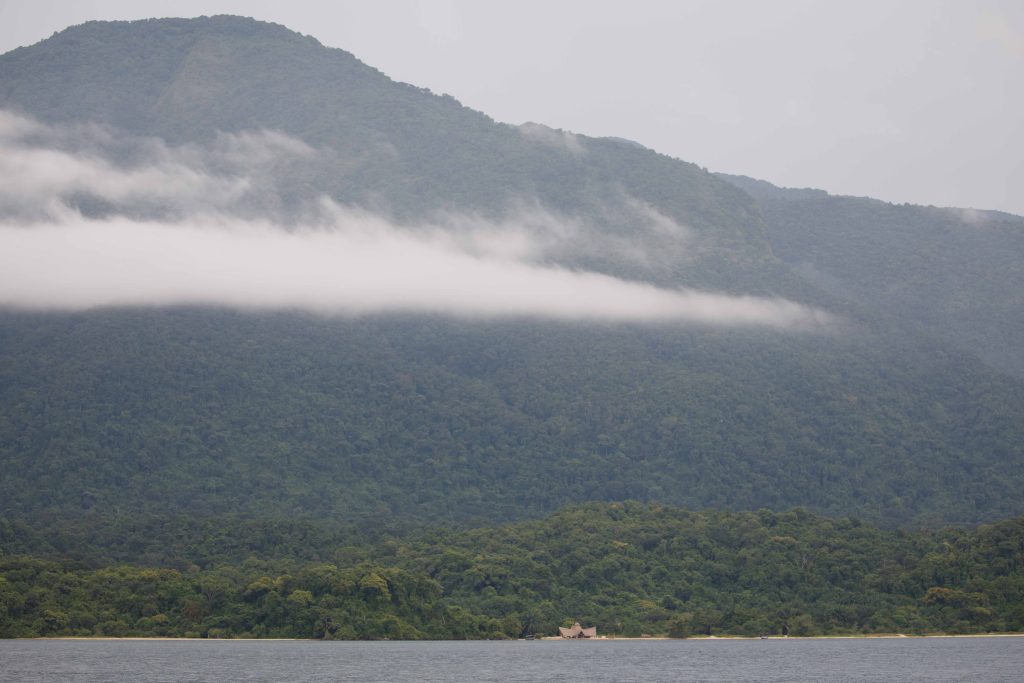
Best Time to Visit Mahale Mountains National Park
The best time to visit Mahale Mountains National Park is the dry season from June to October, with August through October the strongest window for chimpanzee trekking safaris because the apes range on the lower slopes near the lakeshore. Most camps close from March to May during the long rains and scheduled flights stop with them. Mahale lies on the eastern shore of Lake Tanganyika in western Tanzania and holds the largest protected population of eastern chimpanzees.
Timing matters more here than in a savanna park. Chimpanzees move vertically with the fruiting season, so the month you choose decides whether your trek is ninety minutes or five hours, and whether the camp you want is even open.
Dry Season Safaris in Mahale, June to October
This is the conventional answer and it holds up. Rainfall is low, humidity drops, trails firm up and the lake settles. Every camp in the park is operating and the scheduled charter flights run to their usual rotations.
June works as a shoulder month. The long rains have only recently finished, camps reopen at the start of the month, and conditions are usually good even if the forest is still wet in places. Chimpanzees at this point are often still ranging higher up the mountain, so treks in June and July can be long and steep. Fit walkers do not mind; anyone less certain on their feet should aim later.
By August the picture shifts. Temperatures climb through September and into October, which is the hottest stretch before the rains break, but the trekking gets easier and the lake is at its clearest for swimming and snorkelling.
The single most useful fact for planning: chimpanzees at Mahale climb when it rains and drop towards the lake when it does not. Everything else about seasonal timing here follows from that one behaviour.
Peak Chimpanzee Trekking Months, August to October
If seeing the M group is the reason you are going, book August to October.
Through these months the habituated community tends to favour the lower slopes close to the lakeshore camps, which shortens the walk in and lifts the frequency and length of sightings. Guides report more prolonged viewing, with the chimps spending longer in accessible areas rather than moving through steep canopy above you. Reduced undergrowth also helps, since visibility in the forest improves once the wet season growth dies back.
None of this makes a sighting certain. Chimpanzees are wild, unfenced and free to be anywhere across a home range covering steep forested country. What the season buys you is better odds, and with two or three trekking mornings in this window the chances are strong.
This is also high season for rates and for demand on the small number of rooms in the park, though Mahale never feels busy. Total visitor numbers here run in the low thousands a year.
Green Season Trips to Mahale, November to February
The short rains arrive around November and run into December, followed by a drier spell through January and February before the long rains.
Trekking in these months is harder. Chimps move higher as trees fruit up the mountain, trails turn slippery, and a morning that would have taken an hour in September can eat most of a day. Some operators point out that this actually suits less able visitors better than June and July in certain years, because the animals sometimes come lower over the Christmas period, though it varies and nobody should plan around it.
What you gain is emptiness, softer pricing, forest at its greenest, and the storms. Lightning over the lake at night in the green season is a genuine feature, and views across to the Congo shore are often sharper after rain has cleared the air. Birding also improves with migrants present and breeding activity underway.
The Long Rains and Camp Closures, March to May
March to May is the closure period, and it is worth being blunt about it.
Most camps in Mahale shut for these months. Scheduled flights between the park and Arusha stop when the camps do, which removes the practical route in for the vast majority of visitors. Rain is heavy, trails are difficult, lake levels rise and the shoreline changes.
The park itself remains accessible in theory, and determined travellers can still reach it via Kigoma using park accommodation. In practice, this is not a period to plan a first visit around. If your travel dates are locked to April, another destination will serve you better.
Month by Month for a Mahale Chimpanzee Safari
June
Camps reopen, rains have eased, flights resume. Conditions good, forest still damp underfoot. Chimps often high on the slopes, so expect longer treks. Fewer visitors than later in the season.
July
Reliably dry with comfortable temperatures. Strong month for hiking and for the Nkungwe climb. Chimpanzees still ranging up the mountain in many years, so treks stay demanding.
August
Hot, clear and settled. Trekking hits its stride as the apes come lower, with frequent and longer sightings reported. Best all-round month for combining chimps, the lake and forest walks.
September
Peak conditions continue. Underwater visibility on the lake at its best, up to around twenty metres. Trails dry, walking straightforward, demand on rooms at its highest.
October
Hottest month before the rains break. Trekking still excellent and chimps usually low. Heat makes the lower forest heavy going, and the lake becomes the main event each afternoon.
November and December
Short rains, quieter camps, softer rates. Storms over the lake at night, dramatic skies, greener forest. Chimps climb and treks lengthen. Good for photographers and birders who accept the walking.
January and February
Drier gap between the rains. Variable but often pleasant, with fewer visitors than the peak months. Trekking conditions sit somewhere between the two extremes and vary week to week.
March, April and May
Long rains. Most camps closed, scheduled flights suspended, trails difficult. Outside the visitor season for all but the most determined independent travellers.
Best Time for Mount Nkungwe Trekking Trips
The Mount Nkungwe trek follows the same calendar but with tighter margins, since you are camping high on the mountain for two or three days rather than sleeping at the beach.
May through October is the window operators quote, with June to September the sweet spot. Trails firm up, streams drop and summit visibility improves, which matters because the whole point of the climb is the view west across the lake to the Congolese highlands. Cloud sitting on the summit is common outside the driest months, in which case you climb 1,700 metres and see the inside of a cloud.
December to February also works for some parties, between the short and long rains. October is climbable but hot on the lower forest sections. March to May is out, since the camps that organise rangers, porters and equipment are shut.
Best Time for Lake Tanganyika Boat Safaris and Snorkelling
Water activities peak with the dry season. From June to October the lake is calmest and clearest, with visibility in the driest months reaching around twenty metres over the rocky shallows where the endemic cichlids live. Water temperature holds near 25 degrees year round, so warmth is never the deciding factor.
Afternoon wind is the variable. Mornings are usually flat, which is when kayaking, paddleboarding and snorkelling work best regardless of season. Green season showers can cancel a boat cruise at short notice, and rising lake levels during the long rains change the shoreline itself.
Sunsets are reliable across the dry months and more dramatic in the green ones, so both seasons have a case if evenings on the water are what you are after.
Best Season for Birdwatching Safaris in Mahale
Mahale records well over 300 bird species, including Albertine Rift specials, and the calendar for birding runs opposite to the calendar for chimpanzee trekking.
November through February is the stronger period. Migrants are present, resident species are breeding and calling, and the forest is active. The trade is wet trails and chimps ranging high. Dry season birding is still productive, particularly around remaining water sources and along the shoreline where fish eagles, kingfishers and herons work the stream mouths, with the advantage of easier walking and better light through thinner foliage.
Birders who want both usually target the shoulder, aiming for November or the January and February gap between the rains.
There is no month that is best for everything here. Chimps favour the dry season, birds favour the wet one, and the camps are only open for part of both.
How the Season Affects Flights and Access to Mahale
Access is the practical constraint that catches people out, because it is not continuous through the year.
During the peak months from June to October, the operators with camps in Mahale run scheduled flights between the park and Arusha, typically on Mondays and Thursdays, often routing via Katavi. From roughly October through to March those flights reduce in frequency, running around twice a week. From March into May, with camps closed, the scheduled service stops entirely.
That rotation dictates trip length as much as your preferences do. If flights run Monday and Thursday, your stay is three or four nights whether you wanted three or four or not. Private charters break that constraint at a cost, and the Kigoma route by boat runs year round for independent travellers willing to spend a full day getting south. Our 4 day Mahale chimp and lake safari adds a full day on the water to the trekking mornings.
Where Mahale Is and How Long to Stay
Mahale Mountains National Park covers roughly 1,600 square kilometres on the eastern shore of Lake Tanganyika, in the Uvinza District of Tanzania’s Kigoma Region. It was gazetted in 1985 and has no roads inside it, so all movement is on foot or by boat.
Three nights is the practical minimum whatever month you pick, giving two or three trekking mornings. Chimpanzee sightings improve markedly with repeat attempts, and a single morning in any season is a gamble. Four or five nights adds room for a forest walk, a boat safari and a rest day, and because the flights dominate the cost of the trip, the extra nights are proportionally the cheapest part of it.
Best Time to Visit Mahale: Frequently Asked Questions
Does the cost of a Mahale safari change with the season?
Yes. Rates at the lakeshore camps peak from June to October and soften in the green season from November to February, with the premium camps starting from around US$1,500 per person per night in high season. Park fees do not vary by month: non-resident adults pay roughly US$80 to US$95 per day depending on VAT treatment, plus a concession levy of about US$35 per adult per night and a chimpanzee trekking permit at around US$150 per person. East African citizens pay considerably less on entry fees.
Can you visit Mahale in the rainy season?
During the short rains from November to February, yes, and some travellers prefer it for the lower rates, the emptiness and the storms over the lake. During the long rains from March to May most camps close and the scheduled flights stop, which makes a visit impractical for all but determined independent travellers using park accommodation via Kigoma.
Which month gives the best chance of seeing chimpanzees?
August through October, when the M group tends to range on the lower slopes near the camps. Sightings are reported as more frequent and longer through this window. Chimpanzees can be tracked year round and nothing is guaranteed in any month, which is why two or three trekking mornings are recommended rather than one.
Is Mahale crowded in high season?
No. There are only a handful of rooms across the whole park and annual visitor numbers run in the low thousands, so even peak months feel empty by the standards of northern Tanzania. What high season does affect is availability, since the small inventory books out well ahead, and pricing.
How long should I stay in Mahale?
Three nights minimum, four or five if you want a rest day or time for the lake and forest walks. Adding the Mount Nkungwe climb takes you to five or six nights, since the mountain alone runs two to three days. Flight rotations on set days of the week often decide the exact number for you.
What is the weather like in Mahale?
Warm and humid year round, with daytime temperatures typically in the high twenties and low thirties Celsius and cooler nights, particularly at altitude. The long dry season runs June to October with sunny days and low humidity. The short rains fall around November and December, the long rains from March to May. Lake water sits near 25 degrees throughout the year.
When is the best time to climb Mount Nkungwe?
May to October, with June to September the most reliable for summit visibility. December to February also works between the rains. Avoid the long rains from March to May, when the camps that arrange rangers, porters and equipment are closed.
Booking Your Mahale Trip
The safari companies and tour operators listed on this website put trips like this together for a living and know which camps, guides and routes actually deliver. We are an independent guide to Mahale; we do not book or sell tours ourselves.
When you are ready, arrange your safari, tour or holiday with one of the recognised operators listed here. Tell them your dates and what matters most, and a real person, not a form, will handle the itinerary, park bookings and logistics for you.