Where to Stay in Mahale
Accommodation in Mahale comes down to two lakeside camps and a set of simple park bandas and campsites, all reached by boat since the park has no roads. Guests on a Mahale chimpanzee trekking safari stay at Greystoke Mahale or Mbali Mbali Mahale, both built directly on white sand beaches, or use Tanzania National Parks accommodation near headquarters. Mahale Mountains National Park lies on the eastern shore of Lake Tanganyika in western Tanzania.
Fewer than twenty rooms exist in the whole park. That is not a shortlist someone has curated for you; it is the entire supply, and it explains both the pricing and the emptiness.
Greystoke Mahale: The Premium Camp on Kangwena Beach
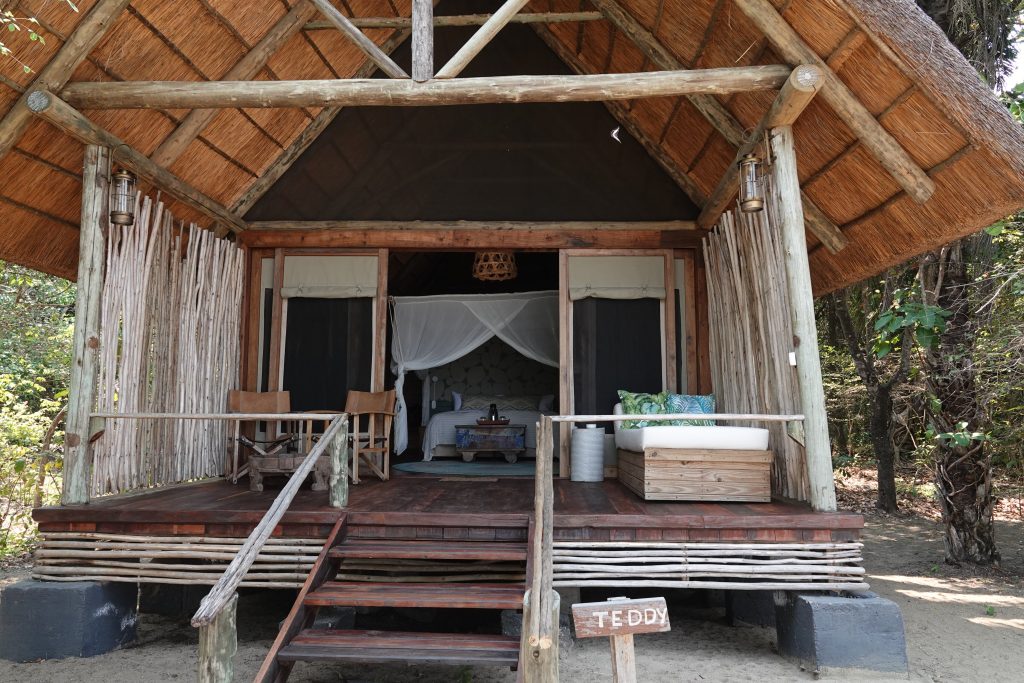
Greystoke sits on Kangwena Beach with six thatched bandas built from driftwood and canvas, and it is the property most people mean when they talk about staying in Mahale.
There are no roads within about sixty kilometres of the camp. Access is by shared charter flights operating Mondays and Thursdays from Arusha, or by private charter, landing at the nearest airstrip followed by roughly ninety minutes by boat. The camp is described in the trade as one of Africa’s most remote upmarket properties, and the guiding reputation is a large part of what visitors pay for.
Rates are fully inclusive: meals, most drinks, laundry, boat transfers from the airstrip, daily chimpanzee trekking and lake activities. Park charges are usually folded in too. It is rustic rather than polished, and deliberately so, with the barefoot register that suits a beach at the foot of a rainforest.
Book far ahead: six bandas at one camp and ten tents at the other means the whole park sleeps under forty people. Peak season months of August and September book out well in advance, and the fixed flight days mean cancellations do not simply free up any night you fancy.
Mbali Mbali Mahale: The Mid-Tier Beach Lodge
Formerly Kungwe Beach Lodge, Mbali Mbali Mahale runs ten permanent tents under thatch on raised wooden platforms, spread along the beach beneath the forest canopy.
Tents come with king or twin beds, one configured as a triple or family room, each with an en-suite shower and toilet, a writing desk, lockable chest, mosquito nets and a private deck facing the water. The main dining area is built in the shape of a shipwrecked boat at one end of the beach, with a lounge and small library alongside.
Inclusions cover accommodation, three daily meals, a set number of house beverages, water during your chimpanzee trek, laundry, boat transfers to and from the Mahale airstrip, kayaking, one chimpanzee trek per day and one boat safari per stay, along with the tourism development levy and VAT. Premium drinks are charged separately.
The property offers a saving against Greystoke and is booked less often, largely because its neighbour has the louder reputation rather than because the experience falls short. Guiding here is well regarded, and swimming and snorkelling work straight off the beach.
Park Bandas and Campsites Near Headquarters
Tanzania National Parks runs simple accommodation and campsites near the park headquarters area, and this is the only genuinely low-cost bed in Mahale.
What you get is basic shelter. What you handle yourself is food, boat transport, and the whole logistics chain from Kigoma, which is a full day of travel away. You still pay the same conservation fee and the same chimpanzee trekking permit as a guest at the luxury camps, so the floor for a short stay remains several hundred dollars before transport or meals.
This route suits independent travellers with time, patience and a tolerance for schedules that move. It does not suit anyone hoping for a cheap version of the fly-in experience, because the trekking is identical but everything around it is on you.
Greystoke Mahale
Six driftwood and canvas bandas on Kangwena Beach. Fully inclusive at the top of the Tanzanian range. Strong guiding reputation, boat-only access, shared charters on set days. The premium option and the one that books out first.
Mbali Mbali Mahale
Ten thatched tents on raised platforms along the beach, including a family room. Inclusive of meals, house drinks, transfers, kayaking, a daily trek and a boat safari. A meaningful saving against Greystoke with comparable access to the forest.
Park bandas and campsites
Simple accommodation near headquarters run by Tanzania National Parks. Self-catering, self-organising, reached via Kigoma. Cheap on paper, demanding in practice, and the only budget option inside the park.
Kigoma hotels
Not in the park, but used as a staging point by travellers taking the boat route. A night here before an early departure is often unavoidable if you are not flying in on a charter.
What Camp Rates Actually Include
This is where quotes diverge and where comparison gets confusing, so it is worth spelling out.
Both lakeside camps work on a fully inclusive basis. Meals, a defined allowance of drinks, laundry, boat transfers from the airstrip, kayaking, snorkelling equipment, one chimpanzee trek per day and a boat safari during your stay typically sit inside the rate. Park conservation fees and the overnight concession levy are usually folded in as well, which is why a Mahale bed looks so much dearer than a Serengeti one before you compare the tents themselves.
Outside the rate: premium spirits and wines, sport fishing, private boat or dhow charters, and the multi-day Mount Nkungwe trek with its rangers, porters and camping equipment. Tips are separate everywhere and camps will suggest a range on arrival.
When two operators quote wildly different figures for the same camp, the difference is almost always whether flights and park charges sit inside the number.
Choosing Between the Two Mahale Camps
With only two properties, the decision is simpler than in most destinations, and it usually comes down to budget and availability rather than style.
Greystoke carries the reputation and the higher rate, and the smaller room count makes it more exclusive by default. Mbali Mbali offers a genuine saving with a similar shape of experience: same beach front, same forest behind, same M group in the morning, ten tents rather than six.
Availability decides it for a lot of people. In August and September, whichever camp has space on the flight days you can travel is the camp you stay at, and travellers who insist on one property often find themselves shifting dates by weeks. If you are set on a particular camp, book early and be flexible about the month.
Under forty beds in sixteen hundred square kilometres. You are not choosing from a market; you are hoping one of two camps has your dates free.
Camping and Overnight Options on the Mountain
Sleeping away from the beach means the mountain, and it means arranging things in advance.
The Nkungwe climb involves one or two nights in tented camps on the slope, with an armed park ranger required and porters carrying equipment and food. Camps organise this on request rather than as a standard offering, and it needs a week or so of notice rather than a conversation at dinner.
Nights at altitude are cool, which is a relief after the climb and a surprise to anyone who packed purely for rainforest heat. From higher camps on clear evenings you look down on the lake and the kerosene lamps of the fishing fleet working through the night, which is one of the better arguments for doing the climb at all.
Overnight camping inside the park also attracts the same per-night concession levy that applies to camp guests.
Families, Children and Room Configurations
Mahale is not an obvious family destination, though it can work with planning.
Mbali Mbali welcomes all ages and has one tent configured as a triple or family room. The constraint is not accommodation but trekking, since park rules set a minimum age for going after the chimpanzees. Camps in Mahale cite twelve years as the figure applied by Tanzania National Parks, while several national sources give fifteen as the Tanzanian standard, so confirm which applies when you book.
Younger children can stay at the camps and use the lake, and reduced park fees apply to under-sixteens with no charge for the very young. Whether a child who cannot trek will enjoy several days on a remote beach is a judgement only you can make.
When the Camps Are Open and Closed
Accommodation in Mahale runs on a seasonal calendar, which surprises people used to year-round lodges.
Most camps close from around March to May during the long rains, and the scheduled charter flights stop when they do. Properties reopen at the start of June and operate through to February. Flight frequency peaks from June to October, typically Mondays and Thursdays, and reduces to roughly twice weekly from October to March.
That rotation also decides the length of your stay. If the aircraft comes in Mondays and Thursdays, you are booking three nights or four, whatever your preference.
Getting to Your Camp in Mahale
Every arrival ends on water. Fly-in guests land at an airstrip near the park boundary and transfer by boat for around ninety minutes along the shoreline to the camp beaches, with the transfer arranged and included by the camp. Our 5 day Mahale and Lake Tanganyika safari gives the lake side of the park proper time rather than an afternoon.
The alternative flies Dar es Salaam to Kigoma in roughly three hours, then continues south by light aircraft in forty five minutes or by speedboat in four to six hours. Travellers heading for the park bandas usually take the road and boat combination from Kigoma, allowing a full day for the leg.
Mahale Accommodation: Frequently Asked Questions
How much does it cost to stay in Mahale per night?
Premium lakeside camp rates start from around US$1,500 per person per night, fully inclusive, with the mid-tier lodge offering a saving against that. On top sit the park conservation fee of roughly US$80 to US$95 per non-resident adult per day depending on VAT treatment, an overnight concession levy of about US$35 per adult per night, and the chimpanzee trekking permit at around US$150 per person, though camps usually fold these into their quoted rate. Park bandas and campsites cost a small fraction of camp rates but include nothing beyond the bed.
How many places are there to stay in Mahale?
Two lakeside camps inside the park, Greystoke Mahale with six bandas and Mbali Mbali Mahale with ten tents, plus simple bandas and campsites run by Tanzania National Parks near headquarters. That is under forty beds across the whole park, which is why booking well ahead matters in peak season.
Is there a budget option in Mahale?
Yes, in the form of park accommodation near headquarters, reached via Kigoma and requiring you to arrange your own food and transport. You still pay the full conservation fee, concession levy and trekking permit, so the floor is several hundred dollars for a short stay before any travel or meals. Allow a full day of travel from Kigoma each way.
What is included in a Mahale camp rate?
Typically meals, a defined drinks allowance, laundry, boat transfers from the airstrip, kayaking, snorkelling equipment, one chimpanzee trek per day and one boat safari per stay, often with park charges folded in. Premium drinks, sport fishing, private boat charters, the Mount Nkungwe climb and tips fall outside. Inclusions differ slightly between the two camps, so check the list rather than assuming.
Are the camps open all year?
No. Most close from around March to May during the long rains, and the scheduled charter flights stop with them. Camps operate from June through to February, with flights most frequent from June to October and reducing to roughly twice weekly from October to March.
Can children stay in Mahale?
Mbali Mbali welcomes all ages and has a family room, and reduced park fees apply to under-sixteens. The limit is chimpanzee trekking, where camps cite a minimum age of twelve set by Tanzania National Parks while several national sources give fifteen. Confirm which applies when booking, since it decides whether a child can join the main activity at all.
Do I need to book Mahale accommodation in advance?
Very much so. With fewer than forty beds in the park and fixed flight days limiting arrivals, August and September in particular sell out well ahead. Being flexible on which of the two camps you use, and on your exact dates, makes a considerable difference to what is available.
Booking Your Mahale Trip
The safari companies and tour operators listed on this website put trips like this together for a living and know which camps, guides and routes actually deliver. We are an independent guide to Mahale; we do not book or sell tours ourselves.
When you are ready, arrange your safari, tour or holiday with one of the recognised operators listed here. Tell them your dates and what matters most, and a real person, not a form, will handle the itinerary, park bookings and logistics for you.