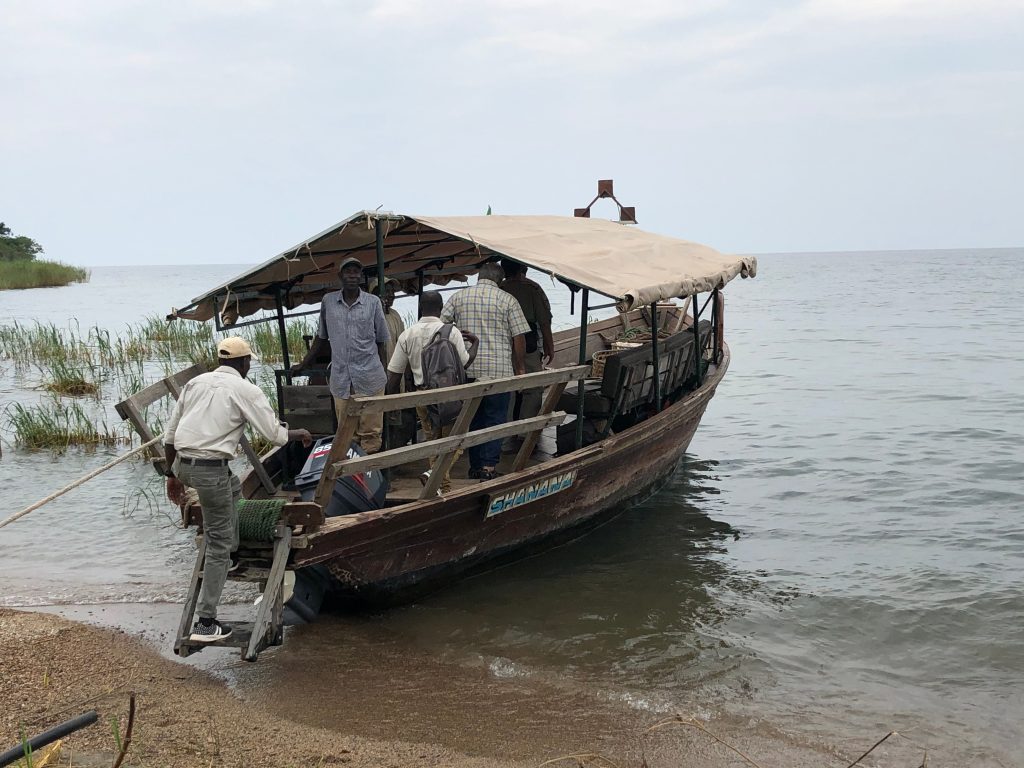
Dhow & Boat Transfers in Mahale National Park
Dhow and boat transfers in Mahale National Park are how everyone arrives and moves along the shoreline, since the park has no roads, with camp boats running around ninety minutes from the nearest airstrip and traditional dhows used for sailing trips and shorter hops. Transfers are included in the lakeside camp rates. Mahale Mountains National Park in western Tanzania sits on Lake Tanganyika, reachable only by air or water.
This is not a scenic extra. Every guest, every crate of vegetables and every returning trekking party moves by boat, and knowing how that works explains most of the logistics of a Mahale trip.
Boat Transfers From the Airstrip
The last leg of the trip in is on water, whichever route you take.
Fly-in guests land at an airstrip near the park boundary, with Kalilani and Kalolwa both named in operator material, and camp boats meet the aircraft. The transfer to the camp beaches takes roughly ninety minutes along the shoreline, though it varies with which beach you are heading for and with conditions on the lake.
Camps arrange and include this in their rates, so there is nothing to organise on the day beyond getting off the plane. Life jackets should be available and worn, and anything that must stay dry travels in a dry bag, because boats on this lake take spray in every season.
It is also a fine introduction to the park. You watch the mountains grow for an hour and a half, forest running almost to the waterline, then the trees open onto a strip of pale sand with a few thatched roofs under them, and that is the whole place.
Pack for the boat, not just the plane. Cameras, phones and documents want a dry bag rather than a rucksack pocket. Afternoon wind puts a chop on the lake that sends spray over the bow, and ninety minutes is long enough for that to matter.
Traditional Dhows on the Mahale Shoreline
Dhows work this coast alongside the motorboats, and camps use them for sailing trips as well as transfers.
The appeal is obvious once you are on one. Moving at walking pace under a mountain rising to roughly 2,462 metres, with a canvas sail up and no engine noise, is something a surprising number of guests rate above the chimpanzee trekking. It is also a steadier platform for photography than a bobbing tender, which matters for evening light on the range.
Camp offerings differ, so ask which property runs dhow trips and whether the evening cruise goes under sail or under power. With only two camps in the park, this is a quick question to answer before booking.
Dhows are slower than motorboats, which is the point on an evening trip and a drawback if you are trying to reach a trailhead.
Boats as the Park’s Road Network
With no roads inside the boundary and none within about sixty kilometres of the camps, the shoreline functions as the road nobody had to build.
Camps hop between beaches in minutes by boat where the same distance on foot takes far longer, because rocky headlands break the shoreline every few hundred metres. That is how guests move between properties, how supplies arrive, and how the park operates at all.
It also widens the trekking network considerably. When the chimpanzees range away from the camp beaches, guides run guests along the coast by boat and start the walk from a different landing point, which saves an hour of hot going before the forest even begins. Boats often handle the return leg on long days too.
Ask how your trekking day is planned before setting off. Knowing whether you walk back or ride back changes how you pace yourself.
Boat Transfers From Kigoma
For travellers not flying in on a charter, the boat leg is considerably longer.
Speedboat, four to six hours
Arranged through the park or private operators in Kigoma, roughly 130 kilometres north. The standard independent option. Morning departures are strongly preferable.
Timber boat, fifteen hours or more
Local wooden boats working the shoreline between villages. Cheap, slow, exposed and an overnight commitment rather than a day’s travel.
MV Liemba, around ten hours
The German-built lake steamer, leaving Kigoma on Wednesday afternoons for the stop at Lagosa, also called Mgambo, where a park boat comes out to collect passengers. There is no dock.
Camp boat, one to two hours
What fly-in guests use from the nearest airstrip. Included in the rate and arranged for you. Shorter because it starts far closer to the park.
Road and boat combinations also exist. A four wheel drive can now reach park headquarters from Kigoma in five to six hours during the dry season, depending on the wait at the Lugulu ferry, which shortens the boat leg considerably.
The MV Liemba
The lake’s most storied vessel deserves its own note.
The MV Liemba is a German-built steamer dating from the colonial era, over a century old, still carrying passengers and cargo down the Tanzanian shore towards Zambia. She leaves Kigoma on a Wednesday afternoon and takes around ten hours to reach the Mahale stop at Lagosa, with a park boat meeting her offshore since there is nowhere to dock. On the return leg she passes again later in the week.
Two warnings. Schedules move, and the service has been in and out of operation over the years, so confirm before building a trip around it. And the timings often mean arriving in the middle of the night, which is either an adventure or a problem depending on your temperament.
Conditions on the Lake
Wind is the daily rhythm here, and it governs every boat movement.
Mornings are usually flat, often glass at dawn. A breeze commonly starts by mid morning, and afternoons can carry a genuine chop that slows boats and makes a long transfer uncomfortable. This is why departures from Kigoma and camp transfers are scheduled early wherever possible.
Water temperature holds near 25 degrees Celsius year round. Lake levels rise during the long rains from March to May, changing the shoreline itself, and most camps close through that period along with the scheduled flights.
Dry season from June to October gives the most settled conditions for every boat activity, which is convenient since it also coincides with the strongest chimpanzee trekking.
There is no road to drive and no path along the shore. The boat is not part of the experience here; it is the infrastructure.
Boat Safaris Along the Shore
Beyond transfers, camps include a boat safari during your stay, and it is one of the better wildlife activities in the park.
These run along the shoreline in the late afternoon, tracking the base of the forested slopes where the streams come down. African fish eagles work the waterside trees and call constantly, palm-nut vultures are common here, and giant kingfishers perch over the water. Yellow baboons come down onto the rocks to forage, hippos hold at a few river mouths, and otters use some of the rocky stream outlets.
In the dry season a boat occasionally puts you level with chimpanzees feeding in shoreline fig trees, which is a view you cannot get on foot. Guests have watched the M group from a few metres offshore.
Evening cruises face west into the sunset across open water, followed after dark by the kerosene lamps of the fishing fleet spreading out across the lake.
Safety on Boat Transfers
Camp operations are routine and run daily by people who know the water.
Life jackets should be available and worn. Transfers are scheduled around the wind rather than around convenience. Crews know where the hippos hold and which stretches to avoid, which is one more reason not to improvise your own boat arrangements inside the park.
Independent travellers hiring speedboats or timber boats from Kigoma should take more care over who they use, since standards vary considerably outside the camp operations. Agree the price, the schedule and the boat before committing, and travel in the morning.
Travel insurance including evacuation cover matters here, given that the nearest hospital is a flight away and every movement is on water.
Best Time and Getting to Mahale
June to October gives the calmest water and most reliable transfers, alongside the strongest chimpanzee trekking. Charter flights run at highest frequency through these months, typically Mondays and Thursdays from Arusha and the northern circuit, often calling at Katavi, and reduce to roughly twice weekly from October to March. From March to May most camps close and the scheduled flights stop. Our 4 day Mahale chimp and lake safari adds a full day on the water to the trekking mornings.
The alternative route flies Dar es Salaam to Kigoma in roughly three hours, then continues south by light aircraft in forty five minutes or by one of the boat options above. Allow a full travel day at each end whichever way you come.
Boat Transfers at Mahale: Frequently Asked Questions
Are boat transfers included in the camp rate?
Yes. Transfers to and from the Mahale airstrip are standard inclusions at the lakeside camps, whose fully inclusive rates start from around US$1,500 per person per night at the premium end and also cover meals, most drinks, kayaking, snorkelling equipment, a boat safari and a daily chimpanzee trek. Independent travellers arranging speedboats from Kigoma pay separately and should agree the price in advance.
How long is the boat transfer from the airstrip?
Around ninety minutes along the shoreline to the camp beaches, varying with which camp you are heading for and with conditions on the lake. Camps arrange and include it, so nothing needs organising on the day.
How long does a boat take from Kigoma to Mahale?
Four to six hours by speedboat, fifteen hours or more by timber boat, and around ten hours on the MV Liemba lake steamer to the stop at Lagosa. By light aircraft the same distance takes about forty five minutes. A four wheel drive can reach park headquarters in five to six hours in the dry season, shortening the boat leg.
What is a dhow trip like at Mahale?
Slow and quiet, under sail rather than engine, moving at walking pace below a mountain rising to roughly 2,462 metres. Camps use dhows for evening sailing trips and some transfers, and they are a steadier platform for photography than a motorboat. Offerings differ between the two camps, so ask which runs them.
Is the MV Liemba still running?
The service has operated for over a century but has been suspended at points over the years, so confirm before planning around it. When running, she leaves Kigoma on Wednesday afternoons and takes around ten hours to the Mahale stop, where a park boat meets her offshore. Arrival times are often awkward.
Do boats get used during chimpanzee trekking?
Frequently. When the M group ranges away from the camp beaches, guides run guests along the shore to a closer landing point and walk inland from there, which saves an hour of hot going. Boats often handle the return leg on long days too. Ask how your day is planned before setting off.
Is boat travel on Lake Tanganyika safe?
Camp transfers are routine, run daily, and scheduled around the wind, with life jackets available. Afternoon chop is the main variable, which is why departures happen early. Independent travellers hiring boats in Kigoma should take more care over operators, since standards vary. Evacuation insurance is worth having, since the nearest hospital is a flight away.
Booking Your Mahale Trip
The safari companies and tour operators listed on this website put trips like this together for a living and know which camps, guides and routes actually deliver. We are an independent guide to Mahale; we do not book or sell tours ourselves.
When you are ready, arrange your safari, tour or holiday with one of the recognised operators listed here. Tell them your dates and what matters most, and a real person, not a form, will handle the itinerary, park bookings and logistics for you.