How Does Mahale Compare to Gombe?
Mahale is roughly forty five times larger than Gombe, holds an estimated 700 to 1,000 chimpanzees against Gombe’s 95, and offers mountains and beaches alongside the trekking, while Gombe is smaller, cheaper to reach and carries the Jane Goodall history. Both are chimpanzee trekking safari destinations on Lake Tanganyika in western Tanzania, and they are the country’s only two protected areas for the species.
Most people choose one. The honest short answer is that Gombe suits travellers drawn by the history and the lower cost of access, while Mahale suits those who want the bigger forest, the harder walk and the lake to swim in afterwards.
Size and Chimpanzee Populations Compared
The difference in scale is the foundation of everything else.
Gombe Stream National Park covers about 35 square kilometres, a narrow strip of forest hemming the steep valleys above the northern lakeshore. It holds around 95 chimpanzees. Mahale runs to roughly 1,600 square kilometres and holds an estimated 700 to 1,000 eastern chimpanzees, described by Tanzania National Parks as the largest protected population of that subspecies anywhere.
At Gombe the habituated animals live in a fragment; at Mahale they live in a mountain range. That shows up in the trekking, since Gombe’s chimps are never far away in a park you could walk across in a morning, while Mahale’s range across steep country and may be four hours from the beach.
The most useful single fact: Gombe is small enough that the chimpanzees are almost always findable; Mahale is large enough that they might not be. In exchange, Mahale gives you a genuine mountain forest, white sand beaches and a park with fewer than forty beds in it.
Access and Getting to Each Park
Both sit on Lake Tanganyika, both are reached from Kigoma, and the similarity ends there.
Gombe lies a short distance north of Kigoma and is reached by boat from town, taking a couple of hours. That makes it far easier and cheaper to visit as an add-on, and it is why independent travellers reach Gombe in numbers they never reach Mahale.
Mahale lies roughly 130 kilometres south. Options are forty five minutes by light aircraft, four to six hours by speedboat, fifteen hours or more by timber boat, or around ten hours on the lake steamer to the Lagosa stop. Most visitors instead fly in on scheduled charters from Arusha, typically Mondays and Thursdays in season, often via Katavi, landing at an airstrip near the boundary followed by roughly ninety minutes by boat.
Neither park has roads inside it. The difference is how far you travel to reach the trailhead.
Park Fees and What Each Costs
Here is the counterintuitive part, and it catches people out.
Gombe carries the higher park entry fee of the two, sometimes described as the highest in Tanzania, even though it is by far the smaller park. Its chimpanzee permit, though, is lower. Mahale’s entry fee sits below Gombe’s while its trekking permit runs higher.
Where the real gap opens is everything else. Gombe can be done on a modest budget from Kigoma with simple accommodation and a boat. Mahale, with its charter flights and two inclusive camps, is one of the most expensive parks in Tanzania to visit. Figures appear in the FAQ below.
The Trekking Experience in Each Park
Both give you an hour with the animals, both cap groups at six, and both require face masks. What differs is the walk and the setting.
Gombe Stream
Steep valleys in a compact park, with treks that are demanding but bounded by the park’s small size. Chimpanzees are almost always locatable. Red colobus, olive baboons and red-tailed monkeys share the forest. The setting is a forest strip above a sandy northern shore.
Mahale Mountains
Sustained climbing on a mountain range rising to roughly 2,462 metres, with treks from forty minutes to most of a day depending on season. Counted among the most strenuous chimpanzee walks in Africa. Nine or ten primate species, white sand beaches, and the option of a two to three day mountain climb.
Mahale’s chimpanzee viewing is also frequently described as the best in the world by specialist operators, which is a strong claim and rests on the size and condition of the population as much as on the habituation.
Research History at Gombe and Mahale
Both parks sit on decades of continuous science, from two different traditions.
Gombe is where Jane Goodall began in 1960, and that work changed what the world understood about chimpanzee tool use and social life. The historical weight of it is why most people know the name Gombe without knowing where it is.
Mahale’s project began in 1961 when Junichiro Itani of Kyoto University started primate work in western Tanzania, with his student Toshisada Nishida habituating chimpanzees at Kansyana from 1965. Nishida directed the study until 2011, and the researchers’ action plan fed directly into the park’s creation in 1985. Findings from Mahale include ant fishing, hunting and meat sharing, male coalition strategies, and the documentation in 1987 of chimps using a bitter plant in what appears to be self-medication.
Both are among the longest-running field studies of any wild mammal. Gombe has the fame; Mahale has the volume of published work on a larger population.
Gombe is where the world learned what chimpanzees are. Mahale is where a great deal of what we know since has been written down.
Scenery, Beaches and What Else There Is to Do
Beyond the apes, the two parks offer different days.
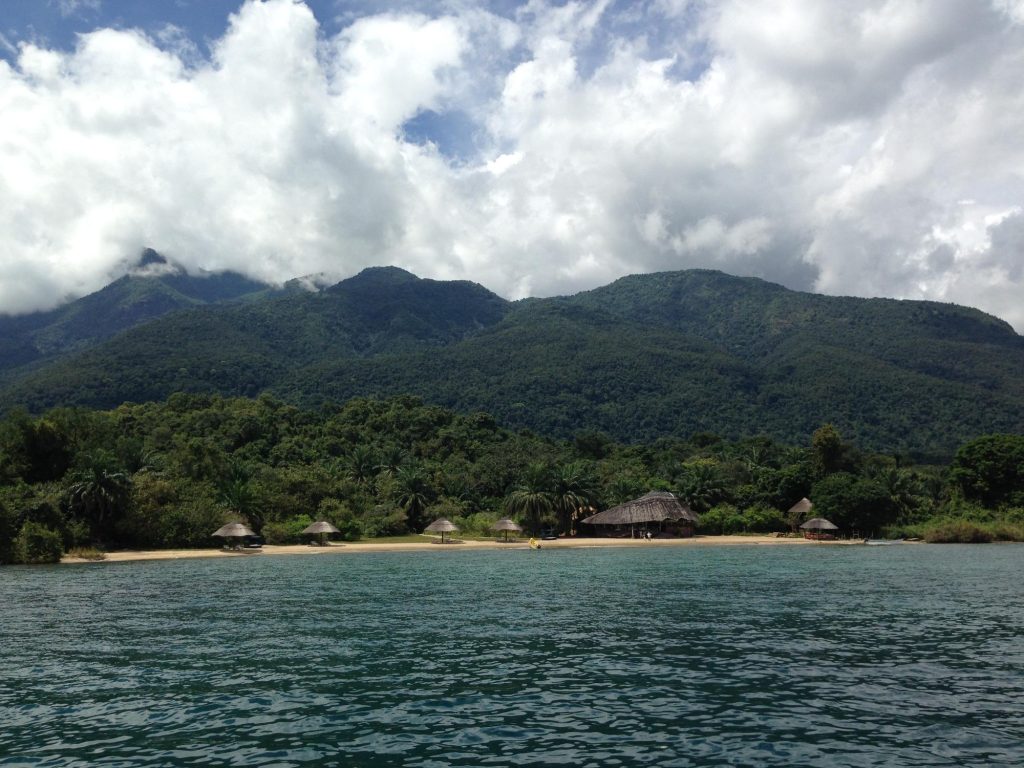
Gombe is a forest strip with a sandy northern shore and steep river valleys behind. It is beautiful, compact, and mostly about the chimpanzees and the walk to find them.
Mahale adds a mountain range, a string of white sand coves between rocky headlands, and a set of lake activities included in camp rates: snorkelling over rocky shallows holding endemic cichlids, kayaking, dhow sailing, boat safaris and sunset cruises. The Mount Nkungwe climb runs two to three days with camping. Afternoons at Mahale are a genuine part of the trip rather than a gap between treks.
Both face west across the lake towards the Congolese shore, so both have the sunsets.
Which Park Suits Which Traveller
A few honest steers, since this is what most readers actually want.
Choose Gombe if budget is a real constraint, if you are already in Kigoma, if the Goodall history is what draws you, or if you want a reasonably certain chimpanzee sighting without committing several thousand dollars to charter flights.
Choose Mahale if you want the larger population and the wilder forest, if you enjoy hard walking, if a beach and a lake at the end of each morning appeals, or if you are already building a western circuit trip with Katavi on the same flight rotation.
Choose both if you have five nights or more and want the full picture, using Kigoma as the hinge between them. That combination costs more in time than money, since Gombe adds relatively little to a trip that already includes the flights west.
Combining Mahale and Gombe on One Trip
It works, and the logistics are worth pinning down before you commit.
Kigoma is the pivot. Gombe sits north of town by boat; Mahale sits south by boat or air. A combined itinerary usually runs five nights or more once the transfers are counted, with a night in Kigoma at one end or in the middle. Some operators package both alongside Katavi as a longer western circuit.
Order matters less than the flight days. Mahale’s scheduled charters run on fixed days, so build the trip around those and fit Gombe into the gap rather than the reverse.
Best Time to Visit Both Parks
The seasons match, since both sit on the same shoreline. Dry season from June to October gives the best trekking conditions in each, with August through October strongest at Mahale as the group ranges on the lower slopes.
Most Mahale camps close from March to May during the long rains and the scheduled flights stop with them. Gombe, being closer to Kigoma and less dependent on charter aircraft, is more accessible year round, which is another point in its favour for travellers with fixed dates in the wet months. Our 10 day Mahale, Gombe and lake safari spends the whole trip on Lake Tanganyika, in both chimpanzee parks.
Mahale and Gombe Compared: Frequently Asked Questions
Which is more expensive, Mahale or Gombe?
Mahale, by a wide margin overall, though the fee structure is mixed. Gombe carries the higher park entry fee, cited around US$100 per non-resident adult and sometimes described as the highest in Tanzania, while its chimpanzee permit is around US$100. Mahale’s entry fee runs roughly US$80 to US$95 per adult per day depending on VAT treatment, with a trekking permit of about US$150 and a concession levy of around US$35 per adult per night. The real difference is access and accommodation: Mahale fly-in packages commonly run US$5,000 to US$8,000 per person for three or four nights, while Gombe can be visited from Kigoma for a fraction of that.
Which park has better chimpanzee sightings?
Gombe is more certain because the park is small and the animals are never far. Mahale is often described by specialist operators as the best chimpanzee viewing in the world, thanks to the size and condition of the population and the M group’s long habituation, but the park is large enough that a single morning can come up empty. With two or three trekking days, Mahale delivers strongly.
Is Gombe worth visiting if I am going to Mahale?
If you have the time, yes, particularly if the Goodall history matters to you. Gombe is reached by boat from Kigoma and adds relatively little cost to a trip that already involves flying west. Allow five nights or more for both, and build the itinerary around Mahale’s fixed charter days.
Which is harder to trek?
Mahale. It is counted among the most strenuous chimpanzee walks in Africa, with sustained climbing on a mountain range rising to roughly 2,462 metres and treks running from forty minutes to most of a day. Gombe’s valleys are steep but the park’s small size bounds the distance. Both are considerably more demanding than chimpanzee trekking at Kibale in Uganda.
How many chimpanzees are in each park?
Gombe holds around 95 in about 35 square kilometres. Mahale holds an estimated 700 to 1,000 across roughly 1,600 square kilometres, the largest protected population of eastern chimpanzees anywhere. Only one community at Mahale, the M group of around sixty to seventy five animals, is habituated for visitors.
Can you drive to either park?
Neither has roads inside it. Gombe is reached by boat from Kigoma. Mahale is reached by charter flight and boat, or by lake transport from Kigoma, with an improved four wheel drive track now reaching the park headquarters area in the dry season but stopping at the boundary.
Which has the better scenery?
A matter of taste, though Mahale has more of it. Gombe is a compact forest strip with steep valleys and a sandy northern shore. Mahale adds a mountain range topping 2,400 metres, a string of white sand coves, and lake activities including snorkelling over endemic cichlids, kayaking and dhow sailing. Both face west for the sunsets.
Booking Your Mahale Trip
The safari companies and tour operators listed on this website put trips like this together for a living and know which camps, guides and routes actually deliver. We are an independent guide to Mahale; we do not book or sell tours ourselves.
When you are ready, arrange your safari, tour or holiday with one of the recognised operators listed here. Tell them your dates and what matters most, and a real person, not a form, will handle the itinerary, park bookings and logistics for you.