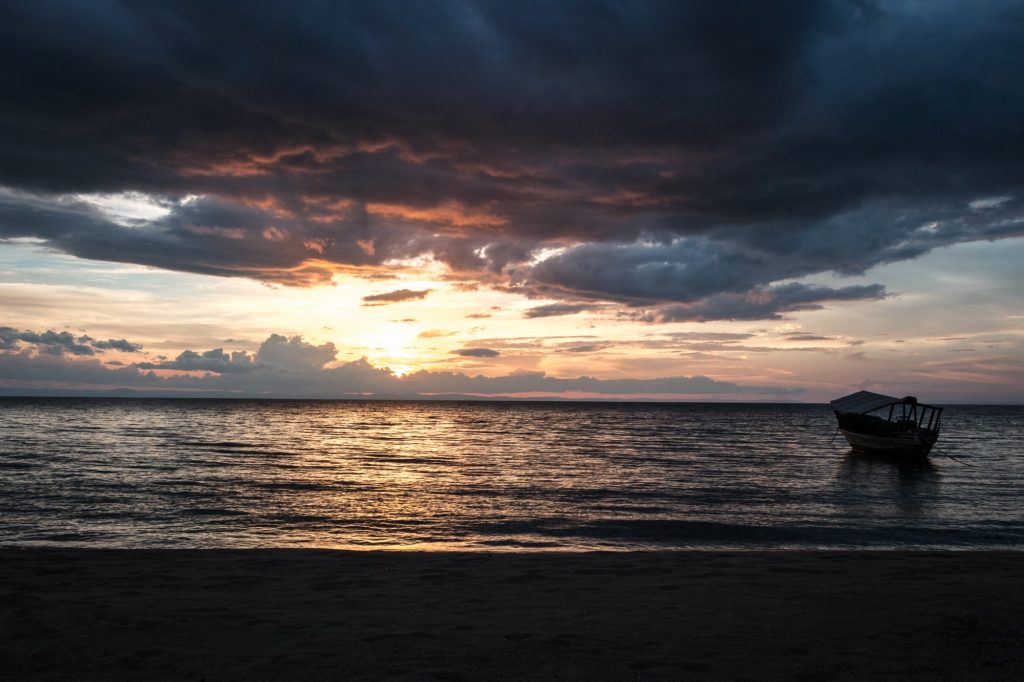
What Is the Weather Like in Mahale?
Mahale has a warm tropical climate with afternoon temperatures of around 26 degrees Celsius through the dry season, cool nights that can drop to about 14 degrees in June, and a wet season from November to April delivering afternoon thunderstorms rather than all-day rain. Weather shapes every Mahale chimpanzee trekking safari, since the apes move up the mountain when it rains. Mahale Mountains National Park sits on Lake Tanganyika in western Tanzania at around 770 metres, rising to roughly 2,462 metres.
Humidity is the part people underestimate. The numbers on a chart look mild; four hours climbing under a closed canopy in still, damp air feels considerably less so.
The Dry Season Climate, June to October
The long dry season is the park’s settled period and the main window for a chimpanzee trekking safari.
From June through September, skies are clear and sunny with afternoon temperatures around 26 degrees Celsius and little rain, in some months almost none at all. Humidity drops noticeably from wet season levels, which makes the walking far more comfortable even when the thermometer reads similarly.
Nights are the surprise. June brings the coldest, with temperatures around 14 degrees Celsius, and anyone who packed purely for equatorial heat notices it at dinner on the beach. Higher up on the Nkungwe route it is colder still.
October marks the end of the dry season and runs hot, with rain becoming likely again towards the close of the month. It is the warmest stretch of the year and the lower forest sections feel it.
Pack a warm layer even in the dry season. Daytime figures around 26 degrees hide nights that fall into the mid teens in June and July, and mountain camps on the Nkungwe climb are colder again. Visitors regularly arrive with nothing warmer than a shirt and regret it on the first evening.
The Wet Season, November to April
Rain arrives from around November and continues into April, with the heaviest months falling in the later part of that span.
The pattern matters more than the total. Wet season rain here comes largely as afternoon thunderstorms rather than continuous grey drizzle, and storms seldom last the whole day. Mornings are frequently clear, which is fortunate given that trekking happens early. What the rain does is soak the ground, thicken the undergrowth and push the chimpanzees higher up the slope after fruiting trees.
April is typically the wettest month across this part of Tanzania, with nearby Kigoma recording its rainfall peak then and relative humidity reaching around 80 percent through April and May. May sees rainfall taper as the dry season approaches.
Most camps in Mahale close from around March to May, so the very wettest weeks are outside the visitor calendar for practical purposes.
Temperature Through the Year
Seasonal variation in temperature here is small, which is characteristic of a site this close to the equator.
Daytime figures sit broadly in the high twenties to low thirties Celsius through the year, with afternoon highs around 26 degrees typical of the clear dry months and warmer readings in October and the pre-rain build-up. Nearby Kigoma, at a similar elevation on the lake, records its warmest month around September or October and its coolest around July, with only a couple of degrees separating them on average.
Nights swing more than days. Dry season nights in June and July drop into the mid teens; wet season nights stay warmer and muggier. Lake water is the steadiest thing in the whole system, sitting near 25 degrees Celsius all year, which is why swimming works in every open month.
Humidity, Rainfall Totals and What They Mean on the Trail
Western Tanzania on this shoreline is genuinely wet by Tanzanian standards. Kigoma records well over a metre of annual rainfall spread across a large number of rain days, and Mahale, sitting against a mountain range that catches weather off the lake, receives more still on its western face.
Humidity around 80 percent in April and May is what makes the wet season walking hard. Clothing does not dry, sweat does not evaporate and the forest air under canopy barely moves. August is typically the least humid month of the year in this region, which is another reason it sits at the centre of the recommended window.
On the trail, rainfall shows up as slippery rock, saturated leaf litter on gradient, swollen stream crossings and vegetation that soaks you at shoulder height whether or not it is actively raining.
June
Dry season underway, clear skies, afternoons around 26 degrees. The coldest nights of the year at roughly 14 degrees. Forest still damp from the long rains in places.
July and August
Reliably dry with very little rain, low humidity by local standards, sunny days and cool evenings. August is typically the least humid month, which makes it the most comfortable for hard walking.
September
Warm, clear and settled, with humidity still low and the lake at its calmest and clearest. Among the warmest months of the year on average.
October
The hottest stretch before the rains break, with rain becoming likely towards the end of the month. Lower forest sections feel heavy in the heat.
November and December
Wet season begins. Afternoon thunderstorms rather than all-day rain, dramatic skies, lightning over the lake at night. Warm and muggy, with ground turning slippery.
January and February
Still wet but often with a drier gap between the two rainy periods. Warm, humid, variable week to week. Fewest visitors of the open season.
March, April and May
Heaviest rainfall of the year, with April typically the wettest and humidity near 80 percent. Most camps closed and scheduled flights suspended.
How Altitude Changes the Weather Inside the Park
Mahale is not one climate but several stacked on top of each other, because the range climbs from a lake surface at about 770 metres to roughly 2,462 metres at the summit of Mount Nkungwe.
Down at beach level you get the warmest, muggiest conditions. Move up through montane forest and the temperature falls, mist becomes common and the ground stays wetter for longer. Above about 2,300 metres the forest gives out to open grassland, where wind and sun replace canopy shade and nights turn genuinely cold.
Cloud sitting on the summit is common outside the driest months, which matters if you are climbing for the view west across the lake. Trekking parties aim to be on top early in the morning for exactly that reason.
Weather on Lake Tanganyika
The lake has its own daily rhythm and it affects boat transfers, snorkelling and kayaking more than any seasonal figure does.
Mornings are usually flat and calm, which is when paddling and snorkelling work best in any month. Afternoon wind frequently puts a chop on the surface, slowing boats and making the water less inviting. Departures from Kigoma and transfers along the shore are scheduled early for this reason.
Water temperature holds near 25 degrees Celsius year round, and dry season underwater visibility over the rocky shallows can reach around twenty metres. During the long rains, lake levels rise and the shoreline itself shifts, which changes the beaches from one season to the next.
The chart says 26 degrees. Under a closed canopy, on gradient, with the air standing still, it does not feel like 26 degrees.
How the Weather Affects Chimpanzee Trekking
This is the practical payoff of everything above, and it is the reason weather matters here more than at most safari destinations.
Rain drives fruiting up the mountain, and the M group follows the fruit. During the dry months the productive trees sit low, near the lakeshore, and treks can be short. Once the rains come, the group climbs and a walk that took ninety minutes in September can take most of the day in January.
Wet weather also thickens undergrowth, which guides then cut through, and makes descents genuinely slippery. Dry weather thins the vegetation, improving visibility through the forest for both watching and photography.
Sightings are possible year round. What changes with the weather is the effort per sighting and the quality of the viewing once you get there.
What to Wear for Mahale’s Weather
Dress for humid forest first and beach second, because the morning decides your comfort for the day.
Long trousers and long sleeves in light quick-drying fabric protect against wet vegetation, stinging plants and insects while handling the humidity better than cotton. A packable rain shell earns its place in any month, since afternoon storms arrive quickly in the wet season and the canopy stops very little of it. Boots with real grip matter most of all on saturated ground.
Add a warm layer for evenings, more of one if you are climbing. Swimwear for the afternoons, since the lake is warm whatever the month. Dry bags for anything electronic, because boat transfers get spray in every season.
Getting to Mahale and Seasonal Access
Weather decides access as much as comfort. From June to October the scheduled charters run at highest frequency, typically Mondays and Thursdays from Arusha and the northern circuit, often via Katavi, landing near the park boundary with a boat transfer of around ninety minutes. Our 4 day Mahale chimp and lake safari adds a full day on the water to the trekking mornings.
From October to March that service reduces to roughly twice weekly. From March to May, when most camps close for the long rains, the scheduled flights stop entirely. The Kigoma route stays open year round in principle, flying Dar es Salaam to Kigoma in about three hours and continuing south by air or water, though roads towards the park boundary become impassable during the rains.
Mahale Weather: Frequently Asked Questions
Does the weather change what a Mahale trip costs?
Accommodation rates peak in the dry season from June to October, starting from around US$1,500 per person per night at the premium camps, and soften during the wetter months from November to February. Park charges do not vary by season: roughly US$80 to US$95 per non-resident adult per day depending on VAT treatment, about US$35 per adult per night concession levy, and around US$150 per person for the chimpanzee trekking permit.
How hot does it get in Mahale?
Afternoon temperatures sit around 26 degrees Celsius through the clear dry months, with the warmest stretch in September and October when readings climb higher. Seasonal variation is small given the location near the equator, but humidity varies a great deal and is what actually determines how hard the walking feels.
How cold does Mahale get at night?
The coldest nights fall in June at around 14 degrees Celsius at lake level. Wet season nights stay warmer and muggier. Camps on the Mount Nkungwe route sit far higher and are colder again, so warm layers are needed for the climb regardless of month.
When does it rain in Mahale?
The wet season runs from November to April, with rain arriving mostly as afternoon thunderstorms rather than lasting all day. April is typically the wettest month in this part of Tanzania, with humidity around 80 percent through April and May. The dry season from June to October brings very little rain, with July often close to none.
Can you trek in the rain at Mahale?
Yes, and camps run treks throughout the open season. Wet season walking is harder, with slippery ground, thicker undergrowth and chimpanzees ranging higher up the mountain, so treks lengthen considerably. Mornings are frequently clear even in the wet months, which helps, since trekking is a morning activity. If you can pick your dates freely, which month offers the best viewing narrows it down further.
Is the lake warm enough to swim in year round?
Yes. Lake Tanganyika holds near 25 degrees Celsius throughout the year, so swimming is comfortable in every month the camps are open. Dry season brings the clearest water, with visibility over the rocky shallows reaching around twenty metres. Afternoon wind is the main variable rather than temperature.
What is the best weather window for visiting Mahale?
June to October, with August and September offering the most settled combination of low humidity, clear skies and calm water. October is the hottest before the rains break. Most camps close from March to May during the heaviest rainfall, so those months rarely need planning for.
Booking Your Mahale Trip
The safari companies and tour operators listed on this website put trips like this together for a living and know which camps, guides and routes actually deliver. We are an independent guide to Mahale; we do not book or sell tours ourselves.
When you are ready, arrange your safari, tour or holiday with one of the recognised operators listed here. Tell them your dates and what matters most, and a real person, not a form, will handle the itinerary, park bookings and logistics for you.