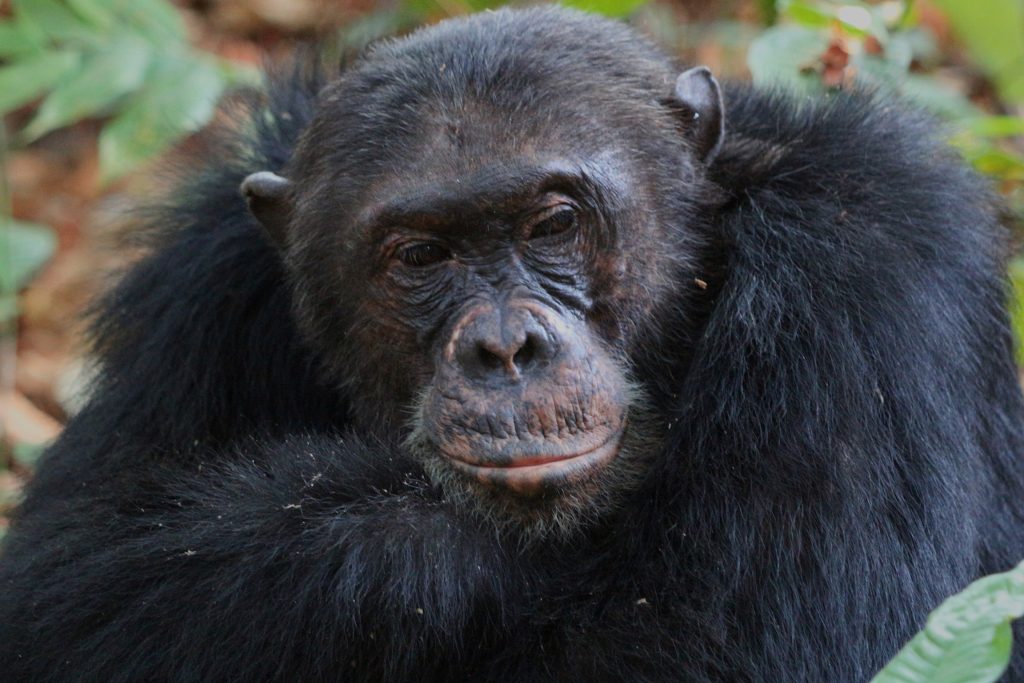
Primate Photography in Mahale National Park
Primate photography in Mahale National Park means shooting chimpanzees and eight or nine other species in dark closed-canopy forest, without flash, within a one hour limit and a six person group. Fast glass and high ISO performance matter more than reach. Mahale Mountains National Park on Lake Tanganyika in western Tanzania holds the largest protected population of eastern chimpanzees and one of the densest primate communities in the country.
It is a difficult place to shoot and an unusually rewarding one. Knowing the constraints before you pack changes what you bring and how you spend the hour.
The Constraints You Are Working Within
Five rules shape every frame you take here, and none of them is negotiable.
Flash photography is prohibited around the chimpanzees. Viewing is capped at one hour from the moment contact is made. Groups are limited to six visitors. The stated distance runs between seven and ten metres, though the animals move freely and sometimes pass closer, in which case you stay still. And surgical face masks are required, which fogs viewfinders and glasses constantly.
Add to that the natural conditions: closed canopy, poor light, animals that spend much of their day overhead and rarely hold still. This is harder than photographing gorillas, who are largely terrestrial and comparatively slow.
None of it stops you getting good pictures. It does mean the equipment choices that work in a savanna park are the wrong ones here.
The change that improves your results most: book two or three trekking mornings rather than one. Primate photography is a numbers game, and the second morning is always better paced than the first, because you know the light, the pace and where to position yourself. It beats any lens upgrade.
Camera Gear for Mahale’s Forest
Weight is a real constraint here, not a theoretical one. Light aircraft serving the park enforce baggage limits well below commercial flights and require soft bags, and everything you bring gets carried uphill in humid air for hours.
A fast lens matters more than an extremely long one, since the chimpanzees are often closer than the light is good. Something around 70 to 300 millimetres covers most situations, and a wider lens earns its place for forest scenes and habitat shots. Very long telephotos are heavier than they are useful in a canopy where the animal is thirty feet up and eight metres away.
High ISO performance is what carries you. Shoot wide open, push shutter speed higher than feels necessary because chimps rarely hold a pose, and accept ISO settings you would avoid elsewhere.
Bring rain protection, a lens cloth for the fogging, spare batteries and memory cards, and a power bank. Camps generate electricity but charging opportunities can be limited.
Photographing the Chimpanzees
The hardest subject and the reason you came.
The M group has been habituated since 1968, so the animals tolerate close human presence without reacting, which is the single biggest advantage you have. What works against you is their behaviour: constant movement, canopy feeding, and a tendency to reposition just as you have focus.
Look for the moments that hold still. Grooming clusters last minutes rather than seconds and are the most reliable frames in the hour. Mothers with infants stay put longer than adult males. Feeding in a fruiting tree gives you a fixed position to work with, even if the angle is upward.
Ground-level animals are the prize. When a party moves along the forest floor, you get eye-level frames with proper backgrounds instead of sky-blown canopy shots. That happens more often in the dry season when the group ranges low.
Ask your guide who you are looking at. Trackers here know individuals by name, mother and rank history, and a picture with a story attached is worth more than one without.
The Other Primates and How They Differ
Eight or nine other species share these forests, and several are easier subjects than the chimpanzees.
Yellow baboons
The easiest primate subject in the park. Fully terrestrial, used to people, and working the beaches and rocks in the late afternoon when the light is at its best. Eye-level frames with a lake background.
Red colobus
Large, russet and noisy, moving in troops through the middle and upper canopy in the lower valley forest. Backlighting is the usual problem. Look for animals against foliage rather than sky.
Angolan black and white colobus
A race found only in these mountains, living in the montane band. Long white mantles photograph beautifully and blow out easily against dark forest. Reached on the Nkungwe route rather than near the beach.
Red-tailed and blue monkeys
Small, fast and rarely still. The hardest of the lot for sharp frames. Red-tails drop lower into the understorey than the colobus, which gives you better light when they do.
Handling the Light
Contrast is the technical problem in Mahale, more than darkness alone.
Shafts of light through a dark canopy blow out while the shadows go black, and the dynamic range in a typical forest frame exceeds what a sensor handles comfortably. Shooting up into the canopy against a bright sky is the losing scenario, and it is also the most common one with chimpanzees overhead.
Reposition where you can. Move so the animal sits against foliage rather than sky, even if it means a worse angle on the face. Expose for the animal and let the background go, since a blown highlight in the canopy is less damaging than an underexposed subject.
Overcast mornings, common in the wetter months, are technically easier than bright ones. Early light is softer and the animals are more active. Dry season afternoons are harsh and the chimps are usually resting anyway.
Everything about this park works against a clean chimpanzee portrait. That is precisely why the ones that work are worth having.
Field Craft on a Trek
Your behaviour affects your pictures more than your settings do.
Move slowly and stay with the group. Sit rather than stand where you can, since a lower angle helps and a seated photographer is less disturbing to the animals. Pre-set your exposure before contact so you are not fumbling through menus while a grooming session ends.
Do not chase. Chimpanzees move constantly, and a photographer trying to keep pace disturbs both the animals and the other five people in the group. Wait, and things come back around within the hour more often than not.
Take the mask seriously and expect fogging. A lens cloth in an accessible pocket saves several minutes over an hour, which is a meaningful proportion of the time you have.
Ethics and What Not to Do
Worth stating plainly on a page about photographing endangered animals.
No flash, ever, around the chimpanzees. Keep the stated distance rather than edging closer for a frame, and if an animal approaches you, stay still and let it pass rather than backing away suddenly. Avoid prolonged eye contact with adult males, which some primates read as a challenge. Never eat near them.
Anyone with a cold, cough or stomach upset is asked to stand down from trekking, because chimpanzees catch human illnesses and the consequences can be fatal. That applies whatever you have flown in to photograph.
Drones require permits in Tanzania that are difficult to obtain and are not welcome in the park.
Best Season for Primate Photography
August through October is the strongest window. The M group ranges on the lower slopes near the camps, treks shorten so you arrive with energy rather than exhaustion, undergrowth has thinned and visibility inside the forest improves considerably. More ground-level frames become possible.
June and July are dry and comfortable with the group often ranging higher, which means longer walks carrying gear. November to February brings green forest, dramatic skies and better birding, at the cost of chimps high on the mountain, slippery ground and treks running several hours each way. Most camps close from March to May.
Getting to Mahale With Photographic Equipment
Access is by air or water only. Scheduled charters run from Arusha on set days in season, typically Mondays and Thursdays, often via Katavi, landing near the boundary followed by a boat transfer of around ninety minutes. At the top end, our 14 day Tanzania chimps safari and Zanzibar covers Tanzania end to end and finishes on the coast.
Confirm the baggage allowance before packing, since limits are lower than commercial flights and soft bags are required. Boat transfers get spray in any season, so gear travels in a dry bag rather than trusted to a rucksack. The alternative route flies Dar es Salaam to Kigoma in roughly three hours, then continues south by light aircraft or speedboat.
Primate Photography at Mahale: Frequently Asked Questions
What does a photography trip to Mahale cost?
Camps are fully inclusive from around US$1,500 per person per night at the premium end, covering meals, transfers, a daily chimpanzee trek, kayaking and snorkelling. Park charges add roughly US$80 to US$95 per non-resident adult per day depending on VAT treatment, about US$35 per adult per night concession levy, and around US$150 per person for the chimpanzee trekking permit. There is no photographic surcharge, but extra nights for more trekking mornings are the spend that improves your pictures most.
Can I use flash to photograph the chimpanzees?
No. Flash is prohibited around the chimpanzees because it disturbs them and can provoke a defensive reaction. This is why high ISO performance and fast lenses matter far more at Mahale than at a savanna destination.
What lens should I bring?
Something fast in roughly the 70 to 300 range handles most chimpanzee situations, since the animals are often closer than the light is good. Add a wider lens for forest and habitat frames. Very long telephotos are heavy, awkward in a canopy at close range, and problematic given the aircraft baggage limits.
How close do you get to the chimpanzees?
The stated distance is seven to ten metres, though the animals move freely and sometimes pass closer of their own accord. You do not move towards them. Viewing is capped at one hour from contact, with groups limited to six visitors and face masks required throughout.
Which primates are easiest to photograph?
Yellow baboons by a distance, since they are terrestrial, used to people and work the beaches in good afternoon light. Red colobus and the guenons are harder, being high in the canopy and usually backlit. The chimpanzees sit in between: habituated and tolerant, but fast-moving and often overhead.
How many days should a photographer allow?
Four or five nights at least. Three gives two trekking mornings, which is the practical minimum for reasonable chimpanzee results. Extra nights add attempts, better light options and time for the lake and shoreline subjects, and since the flights dominate the cost they are proportionally cheap.
Are drones allowed?
No. Drones require permits in Tanzania that are difficult to obtain and are not welcome in the park, so plan on ground and boat-based photography only.
Booking Your Mahale Trip
The safari companies and tour operators listed on this website put trips like this together for a living and know which camps, guides and routes actually deliver. We are an independent guide to Mahale; we do not book or sell tours ourselves.
When you are ready, arrange your safari, tour or holiday with one of the recognised operators listed here. Tell them your dates and what matters most, and a real person, not a form, will handle the itinerary, park bookings and logistics for you.