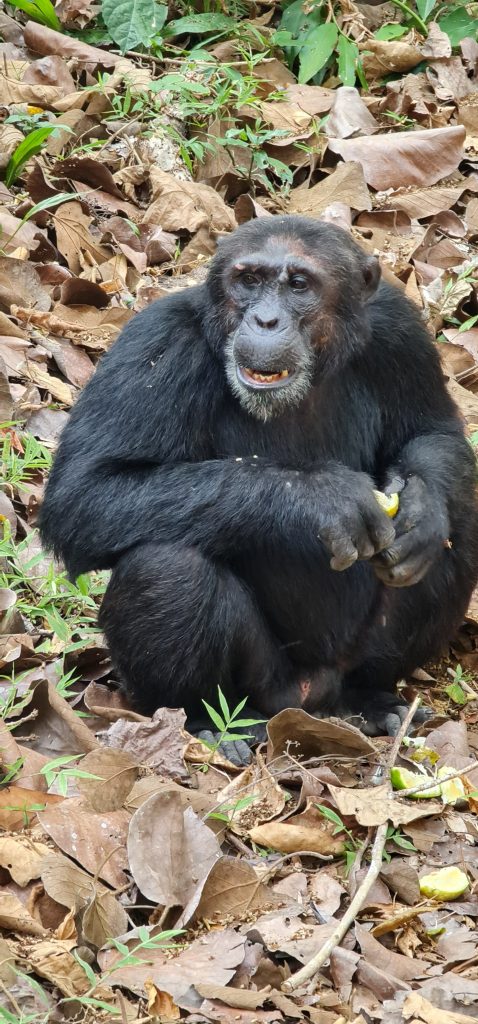
Which Month Offers the Best Chimpanzee Viewing in Mahale?
September is the single best month for chimpanzee viewing in Mahale, with August and October close behind, because the M group ranges on the lower slopes near the lakeshore and trekking conditions are at their most settled. A Mahale chimpanzee trekking safari runs year round, but the odds are not evenly spread. Mahale Mountains National Park in western Tanzania holds the largest protected population of eastern chimpanzees anywhere.
If you can only travel once and want the best chance, book September. What follows is why, and what each of the alternatives actually costs you in trek length and sighting quality.
Why September Wins for Chimpanzee Trekking
Several things line up in September that do not line up together in any other month.
The M group is low. By late dry season the fruiting trees the community feeds on are concentrated on the lower slopes near the lakeshore, which puts the animals within a short walk of the camps and shortens treks dramatically. Sightings through this period are reported as more frequent and longer, with the chimps spending more time in accessible ground.
Conditions are settled. Rainfall is minimal, humidity is near its annual low, skies are clear and trails are firm. Wet season undergrowth has died back, which improves visibility inside the forest for both watching and photography, and cuts down the amount of vegetation guides have to hack through.
And the lake is at its best, with underwater visibility over the rocky shallows reaching around twenty metres, which matters for the afternoons. September is also among the warmest months of the year here, which is the only real mark against it.
The trade-off to accept: September is peak season and the park has fewer than forty beds. Rates are at their highest and availability is tightest. Booking six months or more ahead is not excessive for these dates, and being flexible about which of the two camps you use makes a real difference.
August as the Close Second
August is the month where the shift happens, and for many travellers it is the better pick.
The group typically comes down onto the lower slopes during August, so treks shorten and sighting frequency rises. It is also the least humid month of the year in this region, which makes hard walking noticeably more comfortable than it is in October. Skies are clear and rain is close to absent.
The reason it sits just behind September is consistency. In some years the animals are still ranging higher in early August and drop later, whereas by September the pattern is more dependable. Late August is stronger than early August for that reason.
Demand is at its highest across August and September together, so treat them as one booking window rather than two.
October: Strong Sightings, Difficult Heat
October keeps the chimpanzees low and adds a problem.
This is the hottest stretch of the year, the final push before the rains break, and the lower forest sections feel it. Trekking is still excellent and sightings remain frequent, but walking in high heat under closed canopy at low elevation is genuinely tiring, and some visitors find the afternoons unpleasant away from the water.
Rain becomes likely again towards the end of the month. The upside is that October sits at the edge of peak demand, so availability is sometimes easier than in September, and the lake is still clear and warm for the afternoons.
For fit walkers who tolerate heat well, October delivers most of September’s advantages.
June and July: Good Conditions, Higher Chimps
These months are frequently recommended and deserve a more careful look, because the weather and the chimpanzee behaviour point in different directions.
Conditions are excellent. Camps reopen at the start of June, the flights resume, rainfall is low and July is often close to rainless. June brings the coldest nights of the year at around 14 degrees Celsius, which is a relief for walking.
The catch is location. In June and July the group frequently still ranges higher up the mountain, having not yet worked down towards the lake, which means longer and steeper treks. One specialist notes this suits fit trekkers well and is harder work for anyone less sure on their feet.
So June and July are strong months for a Mahale trip and slightly weaker months for chimpanzee viewing in particular.
September, the best month
Group reliably low, treks short, sightings frequent and prolonged. Settled weather, low humidity, clearest lake. Peak rates and tightest availability.
August, very close behind
Least humid month of the year and the point at which the chimps typically come down. Slightly less dependable early in the month than late.
October, strong but hot
Chimps still low and sightings good. Hottest month of the year, with rain returning late in the month. Sometimes easier to book than September.
June and July, good weather, longer walks
Dry, comfortable and quieter, with the group often still on the upper slopes. Best for fit walkers who do not mind a demanding morning.
November to February, quieter and harder
Short rains and the drier gap after them. Chimps climb, ground turns slippery, treks stretch to several hours each way. Lower rates and far fewer visitors.
March to May, closed
Long rains. Most camps shut and scheduled flights suspended. Outside the practical season for the vast majority of visitors.
Why the Chimpanzees Move With the Months
The mechanism is simple once stated, and it explains every ranking above.
Chimpanzees follow fruit. Fruiting follows rainfall. Rainfall on this mountain shifts the productive zone up the slope during the wet season and down towards the lake during the dry one. Since the M group’s home range covers steep forested country from the shoreline upward, the same community can be forty minutes from camp in one month and four hours away in another.
Nesting sets the daily pattern on top of that. Chimps build fresh sleeping platforms in trees every evening, so trackers start each morning at the previous night’s nests and work forward, which is why departure times shift from day to day.
What Peak Month Viewing Actually Looks Like
Worth setting out, since expectations do a lot of work here.
In a strong month you might walk under an hour, then spend your permitted sixty minutes with a feeding party: mothers with infants, males grooming, adolescents overhead in a fig. Groups are capped at six visitors, face masks are required, and the stated distance runs between seven and ten metres, though the animals move and sometimes walk straight past a seated group.
Chimpanzees are fast and spend a lot of time in the canopy, so even in September you will do a fair amount of repositioning and looking upward. Photography is harder than with gorillas, and flash is prohibited.
What no month guarantees is a sighting. Two or three trekking mornings remain the single biggest improvement to your odds, larger than the difference between any two months on this page.
Picking September buys you a shorter walk. Booking three mornings instead of one buys you the sighting.
Booking Around the Best Months
Two constraints shape a peak season trip and both need handling early.
The first is beds. Two camps with sixteen rooms between them, plus simple park accommodation near headquarters, is the entire supply. August and September sell out well ahead.
The second is the flight rotation. Scheduled charters run on fixed days, most commonly Mondays and Thursdays through the peak season from Arusha and the northern circuit, often calling at Katavi. That means your stay is three nights or four, not two and not five, unless you charter privately or come the slower way from Kigoma.
Plan the trip around the rotation, hold some flexibility on which camp you use, and book earlier than feels necessary.
Getting to Mahale in the Peak Months
Access peaks with the season. From June to October the camps run their charters at highest frequency; from October to March the service drops to roughly twice weekly; from March to May it stops when most camps close.
The alternative route flies Dar es Salaam to Kigoma in around three hours, then continues south by light aircraft in forty five minutes or by speedboat in four to six hours. Allow a full travel day at each end whichever way you come, since a missed connection in western Tanzania can cost you a trekking morning you have already paid for. Our 4 day Mahale chimp and lake safari adds a full day on the water to the trekking mornings.
Best Month for Chimpanzee Viewing: Frequently Asked Questions
Does visiting in the best month cost more?
Yes on accommodation. Camp rates peak from June to October, starting from around US$1,500 per person per night at the premium end, and soften from November to February. Park charges do not change with the season: roughly US$80 to US$95 per non-resident adult per day depending on VAT treatment, about US$35 per adult per night concession levy, and around US$150 per person for the chimpanzee trekking permit.
Is September really better than August?
Marginally, and mainly on consistency. Both months have the group ranging low with settled weather. August is typically the least humid month of the year, which helps on hard walks, but in some years the chimps drop later and early August still involves higher trekking. September is the more dependable of the two, with late August close to identical.
What is the worst month for seeing chimpanzees in Mahale?
March, April and May, when most camps close for the long rains and the scheduled flights stop. Among the months the park is open, the wet season from November to February gives the longest and hardest treks, since the group ranges high and the ground is slippery. Sightings still happen, but the effort per sighting rises considerably.
How many days should I book in the peak month?
Three nights minimum, giving two or three trekking mornings. Even in September, a single attempt is a gamble, and illness on the day disqualifies you from trekking altogether. Four or five nights adds a spare morning and a rest day, and since the flights dominate the cost, extra nights are proportionally cheap.
Will I definitely see chimpanzees in September?
No park guarantees a sighting of an unfenced wild population. September gives you the best odds available, with the M group ranging close to the camps and treks often under two hours, and with two or three mornings the chances are strong. Any operator promising a certain sighting is overselling.
How far ahead should I book for August or September?
Six months is not excessive. The park has fewer than forty beds and fixed flight days limiting arrivals, so peak dates go early. Flexibility on which of the two camps you use, and on shifting by a week, makes a considerable difference to availability.
Is the green season ever better for chimpanzee viewing?
Rarely for viewing itself, though some operators note the group occasionally comes lower around the Christmas period in certain years. What the green season reliably offers is lower rates, near-total solitude, greener forest and much better birding, at the cost of longer, wetter, harder treks.
Booking Your Mahale Trip
The safari companies and tour operators listed on this website put trips like this together for a living and know which camps, guides and routes actually deliver. We are an independent guide to Mahale; we do not book or sell tours ourselves.
When you are ready, arrange your safari, tour or holiday with one of the recognised operators listed here. Tell them your dates and what matters most, and a real person, not a form, will handle the itinerary, park bookings and logistics for you.