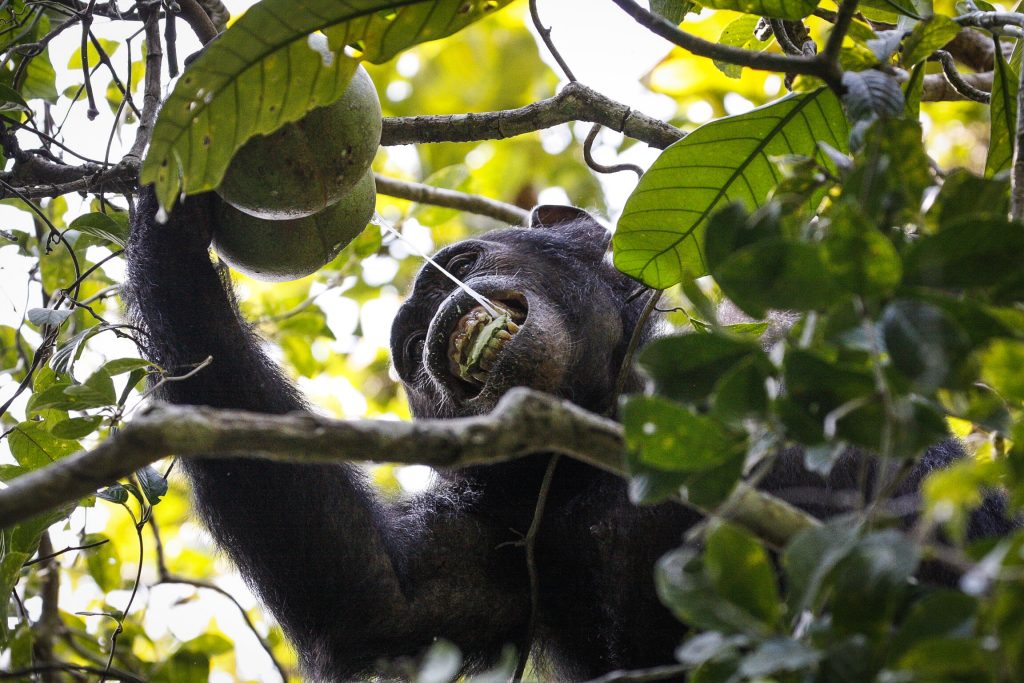
When Is the Best Time to See Chimpanzees in Mahale?
The best time to see chimpanzees in Mahale is August to October, at the end of the dry season, when the habituated M group ranges on the lower slopes close to the lakeshore camps and sightings are most frequent and longest. Trekking runs year round on a Mahale chimpanzee trekking safari, with camps closed for the long rains. Mahale Mountains National Park in western Tanzania holds the largest protected population of eastern chimpanzees anywhere.
Timing here is about altitude, not weather. Chimps climb when the mountain fruits and drop towards the lake when it does not, and the month you pick decides whether you meet them after forty minutes or after five hours.
Why August to October Gives the Best Chimpanzee Sightings
Guides and operators converge on this window, and the reasoning is consistent across sources.
By late dry season the M group favours the lower slopes near the lakeshore, which puts them within easy reach of the camps. Treks shorten dramatically. Sightings are reported as more frequent and more prolonged, with the animals spending longer in accessible ground rather than moving through steep canopy above a struggling group of visitors.
Undergrowth also matters. Wet season growth dies back through the dry months, which improves visibility inside the forest and makes photography less of a fight. Trails firm up, so you arrive at the sighting with energy left rather than having spent it all on the climb.
None of this makes a sighting certain. Chimpanzees are unfenced and free to be anywhere across a large home range, and honest operators say so.
The core mechanism, in one line: chimpanzees follow fruiting trees, fruiting trees follow rainfall, and rainfall on this mountain moves up the slope during the wet season and down it during the dry. Everything else about timing at Mahale follows from that.
June and July: Solid Dry Season Trekking
The camps reopen at the start of June and the flights resume with them, so this is when the season properly begins.
Conditions are good. Rainfall is low, humidity has dropped and trails have started to dry. What is less certain is where the chimps are, because in June and July the group often still ranges higher up the mountain, having not yet worked its way down towards the lake.
The practical effect is longer, steeper treks. Fit walkers tend to enjoy these months, since the forest is at its freshest and there are fewer visitors than in August or September. Anyone less sure of themselves on gradient should aim later in the season.
November and December: Short Rains and Higher Chimps
The short rains arrive around November and run into December, and the trekking changes character.
Chimps move up as higher trees come into fruit, so treks lengthen. Trails turn slippery and undergrowth thickens. A morning that would have taken ninety minutes in September can eat most of the day. Sightings still happen, and camps run treks throughout, but the effort per sighting rises considerably.
Some operators note the picture is not uniform. There are years when the group comes lower over the Christmas period, and one specialist suggests October to February can suit less able visitors better than June and July for that reason. It varies, and nobody should build an itinerary around it.
What is dependable in these months is the emptiness, the softer pricing, the storms over the lake and much better birding.
January and February: The Gap Between the Rains
A drier window sits between the short rains and the long ones, and it is the quietest time to trek that is still practical.
Conditions vary week to week. Some periods walk almost like dry season; others are wet and heavy. Chimps are usually still ranging at mid to high elevation, so treks tend to be long. Visitor numbers are at their lowest of the open season, and the small camps are easier to book at short notice.
This is a reasonable choice for repeat visitors, for photographers who want green forest, and for anyone whose dates are fixed. It is not the window to pick for a first visit built entirely around seeing chimpanzees.
March to May: When the Camps Close
The long rains close the season. Most camps in Mahale shut from around March to May, and the scheduled flights stop when the camps do, which removes the practical route in for the vast majority of visitors.
Rainfall is heavy, trails are difficult, lake levels rise and the shoreline shifts. Chimpanzees remain in the park and can theoretically still be tracked by determined independent travellers using park accommodation reached via Kigoma, but this is not a period to plan a first trip around.
If your travel dates are locked to April, another destination will serve you better than a park where the accommodation is closed.
Month by Month Odds on a Mahale Chimpanzee Safari
June
Camps reopen and flights resume. Dry underfoot, forest still damp in places. Chimps often high, so expect longer treks. Fewer visitors than later in the season.
July
Reliably dry, comfortable temperatures, excellent for hiking of every kind. Group frequently still on the upper slopes, so treks stay demanding in many years.
August
The shift happens. Chimps come lower, treks shorten, sightings lengthen. Hot, clear, settled. The best all-round month for a first visit.
September
Peak conditions hold. Short walks to contact are common, forest visibility is at its best, and the lake is clearest for the afternoons. Highest demand on the few rooms available.
October
Hottest month before the rains break. Chimps usually still low and sightings strong. Heat is the main drawback, particularly on the lower forest sections.
November and December
Short rains. Chimps climb, treks lengthen, ground turns slick. Quieter, cheaper, greener, with storms over the lake at night and better birding.
January and February
Drier gap between the rains, variable week to week. Very few visitors. Treks usually long, since the group tends to stay at mid or high elevation.
March, April and May
Long rains. Most camps closed and scheduled flights suspended. Outside the practical visitor season for all but determined independent travellers.
Time of Day for Chimpanzee Trekking
Season decides the month; the daily rhythm decides the hour, and there is much less flexibility here.
Treks go out in the morning, and this is not arbitrary. Chimpanzees build fresh nests in trees every evening, so trackers start at the previous night’s nests at first light and work forward until they have contact. The animals feed actively early, the forest is cooler, and the light through the canopy is better than it will be at midday.
Camps typically include one trek per day, with afternoons given to the lake. Some allow an afternoon attempt if the morning fails, though after a long morning walk most guests are grateful not to.
Book the month for the odds, and accept the hour: this is a morning activity, decided before dawn by trackers you never meet.
How Many Trekking Days Improve Your Odds
This is the part that matters more than the calendar, and it is the easiest thing to get wrong.
A single trekking morning is a genuine gamble in any month. Two or three mornings shift the odds substantially, because a group that has moved out of range one day is often reachable the next, and because weather or a lost trail on one morning does not then cost you the whole trip.
Three nights in the park is the minimum most operators recommend, which usually yields two or three treks. Given what it costs to reach Mahale by charter flight, arriving for one attempt is poor value. Extra nights are also proportionally cheaper, since the flights are already paid for.
Build in one spare morning if you can. Illness on the day disqualifies you from trekking, and that spare morning is the difference between a setback and a wasted trip.
Best Months for the Rest of a Mahale Safari
Chimpanzees are not the only thing on the calendar, and the other activities do not all peak at the same time.
Lake activities favour the dry season, with underwater visibility for snorkelling reaching around twenty metres in the driest months and the water calmest for kayaking and boat safaris. The Mount Nkungwe trek runs roughly May to October, with June to September best for summit visibility. Birding, on the other hand, is stronger from November to February when migrants are present and residents are breeding.
Sunsets are reliable in the dry months and more dramatic in the wet ones. If you want everything at once, August to October gets you closest, with birding as the compromise.
Getting to Mahale in Peak Chimpanzee Season
Access follows the season. From June to October the camps run their scheduled charters at highest frequency, typically Mondays and Thursdays from Arusha and the northern circuit, often calling at Katavi, landing near the park boundary followed by a boat transfer of about ninety minutes. Our 4 day Mahale chimp and lake safari adds a full day on the water to the trekking mornings.
From October to March those flights reduce to roughly twice weekly. From March to May they stop. The Kigoma route stays open year round, flying Dar es Salaam to Kigoma in around three hours and continuing south by light aircraft in forty five minutes or speedboat in four to six hours.
Peak season also means peak demand on a very small number of rooms, so August and September need booking well ahead.
Seeing Chimpanzees in Mahale: Frequently Asked Questions
Does the season change what a Mahale trip costs?
Yes on accommodation, no on fees. Camp rates peak from June to October, starting from around US$1,500 per person per night at the premium end, and soften through the green season from November to February. Park charges stay constant: roughly US$80 to US$95 per non-resident adult per day depending on VAT treatment, about US$35 per adult per night concession levy, and around US$150 per person for the chimpanzee trekking permit.
What are the actual chances of seeing chimpanzees?
Good, particularly with more than one attempt. Operators describe the chances as reasonable at any time of year given two or three days, and best from August to October. No park guarantees a sighting of an unfenced wild population, and any operator promising one is overselling. The M group is habituated and tracked daily, which is why the odds here are stronger than at most chimpanzee sites.
Can you track chimpanzees at Mahale all year?
Tracking is possible year round in principle, but most camps close from March to May during the long rains and the scheduled flights stop with them, which makes those months impractical for the vast majority of visitors. The working season runs June to February.
Why are the chimps easier to find in the dry season?
They move down the mountain. Fruiting patterns shift with rainfall, and during the dry months the trees the group feeds on are concentrated on the lower slopes near the lakeshore. That puts them close to the camps and shortens the walk. When the rains come, higher trees fruit and the animals climb.
How long do you get with the chimpanzees once you find them?
One hour, capped by park rules from the moment contact is made, regardless of how long the walk in took. Groups are limited to six visitors and surgical face masks are required. The rule applies in every month.
Is it worth visiting in the green season?
For some travellers, yes. You get lower rates, near-total solitude, greener forest, storms over the lake and much better birding. The cost is longer, harder, wetter treks with the chimps ranging high. It suits repeat visitors and fit walkers more than first-timers whose whole trip hinges on a sighting.
How many days should I plan for chimpanzee trekking?
Three nights minimum, giving two or three trekking mornings. Four or five nights is better, adding a spare morning in case of illness or a failed attempt and a rest day between hard walks. Since the flights dominate the cost of reaching Mahale, the extra nights are the cheapest part of the trip.
Booking Your Mahale Trip
The safari companies and tour operators listed on this website put trips like this together for a living and know which camps, guides and routes actually deliver. We are an independent guide to Mahale; we do not book or sell tours ourselves.
When you are ready, arrange your safari, tour or holiday with one of the recognised operators listed here. Tell them your dates and what matters most, and a real person, not a form, will handle the itinerary, park bookings and logistics for you.