Which Beaches Can You Visit Along Lake Tanganyika?
The beaches you can visit along Lake Tanganyika in Mahale are the camp beaches at Kangwena and the neighbouring lodge shoreline, plus a string of small sand coves between rocky headlands reached by boat, and the beaches at park headquarters. All are visited on a Lake Tanganyika beach and chimpanzee safari from the lakeside camps. Mahale Mountains National Park in western Tanzania has no roads, so the shoreline is reached by water.
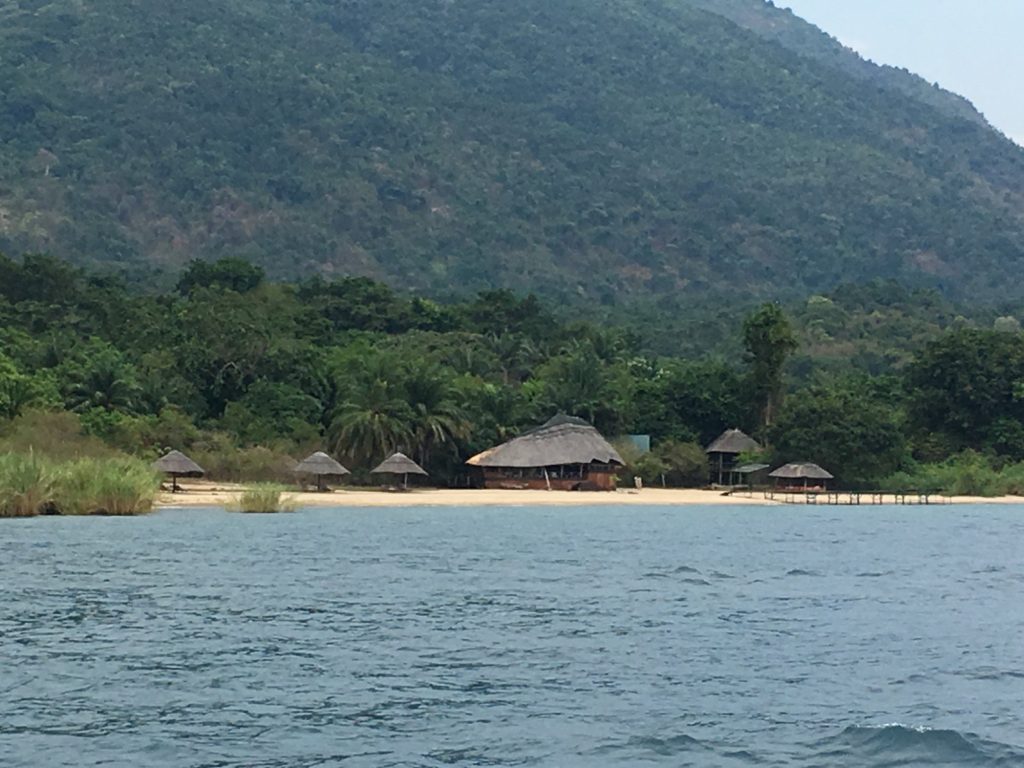
These are not resort beaches with rows of loungers. They are pockets of fine pale sand backed immediately by rainforest, with mountains behind, and on most of them you will be the only person.
Kangwena Beach and the Greystoke Shoreline
Kangwena is the best known stretch, since it is where Greystoke Mahale sits with its six driftwood and canvas bandas built directly onto the sand.
The sand here is fine and pale, the water clear enough to see your feet, and the forest comes down almost to the waterline with the Mahale range stacked behind. There are no roads within about sixty kilometres, and access is by boat from the nearest airstrip, taking roughly ninety minutes along the shore.
What makes it work as a beach rather than just a landing point is the geography. Rocky headlands at either end shelter the sand, and the drop to deep water is close enough that swimming and snorkelling both start a few metres out.
Before you swim anywhere on this shoreline: ask your camp where they go in. Bilharzia is present in parts of the wider lake, though the deep, rocky, well-flushed water at Mahale is regarded as low risk and camps swim daily. Hippos hold at some river mouths and crocodiles are recorded in the park, though described as rare here. Local guidance beats picking your own spot.
The Mbali Mbali Beach and Kungwe Bay
Further along the same coast lies the beach used by Mbali Mbali Mahale, formerly Kungwe Beach Lodge, with ten thatched tents on raised platforms spread along the sand under the forest canopy.
Each tent has a private deck facing the water, and the beach takes its identity from Kungwe, the local name for the mountain that dominates the range. Swimming is possible at all times of day and snorkelling works well at one end of the beach where the rock begins.
Between this beach and Kangwena the shoreline alternates: sand, then boulder field, then a stream mouth, then sand again. Boats hop between them in minutes; walking the same distance takes considerably longer because of the rocky sections.
Small Coves and Boat-Access Beaches
The camps are the only places to stay, but they are not the only beaches. The Mahale coastline holds a series of small sand pockets between headlands, most of them nameless on any map and reachable only by water.
Camps use these for picnic lunches, swimming stops on a boat safari and drop-off points for treks when the chimpanzees have ranged away from the main beaches. Some are barely twenty metres of sand; others run longer. What they share is emptiness.
Ask your guide to build one into a boat trip. An hour on a cove with nothing behind it but forest is a different experience from the same hour outside your tent, and it costs nothing extra on a boat safari that is already included in your rate.
Kangwena Beach
The Greystoke shoreline. Fine pale sand between rocky headlands, forest to the waterline, deep water close in. Reached by boat, roughly ninety minutes from the airstrip.
The Mbali Mbali beach at Kungwe Bay
Ten tents along the sand under canopy, private decks facing west. Swimming all day and good snorkelling at the rocky end of the beach.
Unnamed coves
Pockets of sand between headlands along the park shoreline, used for picnics, swimming stops and boat-assisted trek starts. No facilities, no people.
Park headquarters beach
The working end of the shoreline, near the bandas and campsites run by Tanzania National Parks. Less scenic than the camp beaches and the base for independent travellers.
Beaches at Park Headquarters and Kasiha
The headquarters area serves a different kind of visitor. This is where independent travellers arriving from Kigoma stay, in park bandas or at campsites, and where the road from the north finally ends.
It functions as a working shoreline rather than a holiday beach: boats coming and going, rangers, supplies. The sand is there and swimming happens, but you are on the operational side of the park rather than the barefoot one.
For anyone travelling this way, the trade is obvious. You pay a fraction of the camp rates and you trek the same forest for the same permit, and you spend your afternoons somewhere considerably less picturesque than Kangwena.
What the Mahale Beaches Are Actually Like
Expectations are worth setting, because the word beach carries a lot of assumptions.
They are small. Rocky headlands break the shoreline every few hundred metres, so you get coves rather than sweeps. The sand is fine and pale rather than blinding white, and it is backed by dense forest that gives shade and drops leaves. Baboons come down onto the rocks at either end in the afternoon, and fish eagles call constantly from the trees.
The water is fresh, not salt, which means no rinse afterwards and no sting in the eyes. It sits near 25 degrees Celsius year round. Wind is the main variable, since afternoons often bring a chop that flattens out again by evening.
And they face west, straight into the sunset across open water, which is the single most cited reason people rate Mahale’s shoreline as highly as they do.
Small coves, forest to the waterline, and nobody else on the sand. This is not a beach holiday with a safari attached; it is the other way round.
Snorkelling and Swimming Off the Sand
Twenty metres from most of these beaches the bottom turns to rock, and that is where the lake’s fish concentrate.
More than 250 described cichlid species live in Lake Tanganyika with roughly 98 percent found nowhere else, and the shallow rocky habitat off the Mahale beaches is where the small colourful ones sit. Shell dwellers occupying beds of empty snail shells, rock-grazing species working the algae film, and the occasional larger fish deeper down. Dry season visibility can reach around twenty metres.
Camps supply masks and fins in the rate. You do not need to go out of your depth, and mornings are better than afternoons because the surface is flat.
Kayaking and Dhow Trips Between the Beaches
Kayaks are included at the camps and are the best way to work along the shoreline at your own pace, particularly early when the water is still.
Traditional dhows sail this coast for transfers and evening trips, and moving at walking pace under a two thousand metre mountain with a canvas sail up is something a fair number of guests rate above the chimpanzee trekking. Paddleboards have appeared at some camps and suit flat morning conditions rather than windy afternoons.
Boat safaris along the beaches run in the late afternoon, tracking the base of the forested slopes. Fish eagles, baboons and hippos at river mouths are regular sightings, and in the dry season a boat can occasionally put you level with chimpanzees feeding in shoreline figs.
Beaches Elsewhere on Lake Tanganyika
For context, Mahale is not the only shoreline on this lake, though it is the stretch most visitors mean.
Gombe Stream National Park, north of Kigoma, has a sandy northern shore below its forested valleys and is reached by boat from town. Kigoma itself and neighbouring Ujiji sit on the lake with working waterfronts rather than holiday beaches. Further south, the Zambian shore around Nsumbu National Park has its own coastline, and the Burundian end of the lake near Bujumbura has long had beaches of its own.
These are separate trips rather than day excursions from Mahale, since the lake runs 673 kilometres end to end and there is no quick way along it.
Best Time for the Beaches and Getting There
June to October gives the calmest, clearest water, the settled weather and the best underwater visibility, overlapping with the strongest chimpanzee trekking months. November and December bring short rains, dramatic skies and storms over the lake at night. From March to May the long rains raise lake levels and shift the shoreline itself, and most camps close.
Access is by air or water only. Scheduled charters run from Arusha on set days in season, typically Mondays and Thursdays, often via Katavi, landing near the park boundary followed by a boat transfer of about ninety minutes to the camp beaches. The alternative flies Dar es Salaam to Kigoma in around three hours, then continues south by light aircraft or speedboat. Our 8 day Mahale and Zanzibar safari follows the trekking days with the coast.
Lake Tanganyika Beaches: Frequently Asked Questions
How much does it cost to stay on a beach at Mahale?
Lakeside camp rates start from around US$1,500 per person per night at the premium end, fully inclusive of meals, most drinks, laundry, boat transfers, kayaking, snorkelling and a daily chimpanzee trek. Park charges add roughly US$80 to US$95 per non-resident adult per day depending on VAT treatment, about US$35 per adult per night concession levy, and around US$150 per person for the trekking permit, usually folded into camp rates. Park bandas and campsites near headquarters cost a small fraction of that.
Can you walk between the beaches at Mahale?
Only partly. Rocky headlands break the shoreline every few hundred metres and slow walking considerably, so camps move guests between beaches by boat, which takes minutes rather than hours. Walking inland from any beach means entering the forest, which requires a guide and an armed ranger.
Are the beaches private?
In practice, yes. With fewer than forty beds in the entire park and no road access, the camp beaches see only their own guests, and the unnamed coves along the shoreline usually see nobody at all. Local fishing boats pass offshore, which is part of the character rather than a disturbance.
Is the water safe to swim in at the Mahale beaches?
Camps swim daily and consider this shore low risk given the deep, rocky, well-flushed water. Bilharzia occurs in shallower, weedier parts of the wider lake, so follow your camp’s advice on where to go in. Hippos hold at some river mouths and crocodiles are recorded in the park but described as rare here. Nobody swims out into open water alone.
What is the sand like?
Fine and pale rather than brilliant white, in small coves between rocky headlands, with forest coming down almost to the waterline and mountains rising behind. The beaches are short rather than sweeping. Water is fresh rather than salt, sitting near 25 degrees Celsius year round.
Can you visit Gombe’s beaches on the same trip?
Yes, though it is a separate leg rather than a day trip. Gombe Stream sits north of Kigoma and is reached by boat from town, while Mahale lies roughly 130 kilometres south. A combined trip usually runs five nights or more once the Kigoma logistics are counted.
When are the beaches at their best?
June to October, when the lake is calmest and clearest and the weather settled. Afternoon wind is the main daily variable in any season. Most camps close from March to May during the long rains, when lake levels rise and the shoreline shifts.
Booking Your Mahale Trip
The safari companies and tour operators listed on this website put trips like this together for a living and know which camps, guides and routes actually deliver. We are an independent guide to Mahale; we do not book or sell tours ourselves.
When you are ready, arrange your safari, tour or holiday with one of the recognised operators listed here. Tell them your dates and what matters most, and a real person, not a form, will handle the itinerary, park bookings and logistics for you.