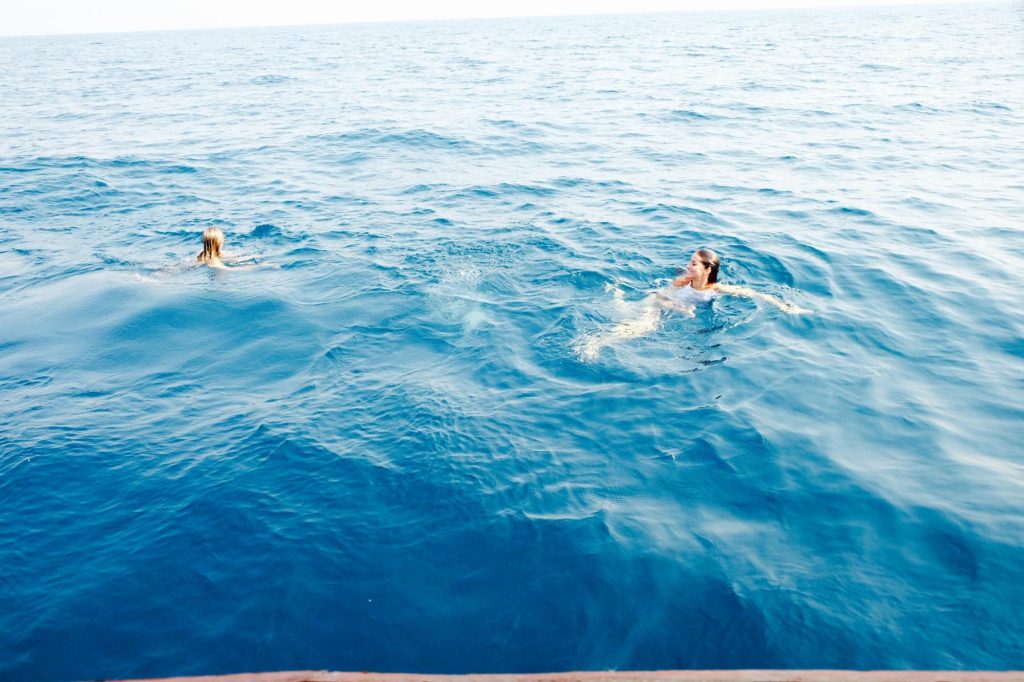
Lake Tanganyika Swimming in Mahale National Park
Swimming in Lake Tanganyika at Mahale National Park happens straight off the camp beaches in fresh water sitting near 25 degrees Celsius year round, and is part of daily life at the lakeside camps rather than a bookable activity. Guests swim after trekking, and camps advise where to go in. Mahale Mountains National Park in western Tanzania sits on the eastern shore of the world’s second deepest lake.
It is the thing nobody plans for and everybody remembers. After four hours on a humid forest slope, walking straight into clear water twenty metres from your tent is the best part of the day.
What Swimming at Mahale Is Actually Like
Fresh water, not salt, which changes the experience more than you would expect. No rinse afterwards, no salt crust, no sting in the eyes. You get out, dry off and that is that.
Water temperature holds near 25 degrees Celsius through the year, so warmth is never the deciding factor in whether you go in. Clarity is the striking part. You can see your feet, and beyond a few metres the sandy bottom gives way to rock where the fish are.
Camps sit directly on small coves of fine pale sand between rocky headlands, with forest coming down almost to the waterline. Swimming is possible at all times of day, and most guests work out on day one that the middle of the afternoon belongs to the lake.
The lake itself is the world’s longest freshwater lake and the second deepest at 1,470 metres. You are swimming in something between nine and thirteen million years old that holds around a sixth of the planet’s available surface fresh water.
The one rule that matters: swim where your camp swims. Ask on arrival where they go in and follow that rather than picking your own beach. Conditions vary along the shoreline, camps know their stretch, and every safety consideration below is handled by that single piece of advice.
Bilharzia and the Honest Safety Picture
Worth addressing directly rather than skirting, since it is the question most people have.
Bilharzia occurs in parts of Lake Tanganyika, particularly in shallow, still, weedy areas where the snail hosts live. The water along the Mahale shore is deep, rocky and well flushed, which is regarded as low risk, and the camps swim daily as a matter of routine.
That said, advice varies by source and by stretch of shoreline, so ask your camp for their current position rather than assuming. Some travellers take a precautionary course of treatment after returning home; that is a conversation for your travel clinic rather than a tour operator.
The sensible practice is the same one that applies to the rest of the lake: avoid shallow, weedy, stagnant water, swim in the deeper clear sections the camps use, and towel off promptly rather than air-drying.
Crocodiles, Hippos and Where Not to Swim
Both are present in the park and both are manageable with local guidance.
Crocodiles are recorded in Mahale but described consistently as rare along this shoreline. Hippos hold at a few river mouths, which is the practical reason camps direct guests to specific beaches rather than letting people wander down the coast and go in wherever it looks inviting.
Do not swim alone, and do not swim out into open water. The lake drops to 1,470 metres and there is nothing between you and the far shore but forty to fifty kilometres of it. Afternoon wind can put a chop on the surface that makes returning to the beach harder than leaving it.
Camp staff will tell you where the swimming happens. That instruction covers all of the above without you having to think about it.
Snorkelling Over the Rocky Shallows
Twenty metres from the sand the bottom turns to rock, and that is where the interest lies.
Lake Tanganyika holds more than 250 described cichlid species with roughly 98 percent found nowhere else on the planet, plus around 75 non-cichlid species of which about 60 percent are also endemic. The shallow rocky habitat off the Mahale beaches is where the small bright ones concentrate.
What you see: shell dwellers living entirely in and around beds of empty snail shells, sometimes in colonies of thousands. Rock-grazing Tropheus and related species working the algae film on boulders, territorial and vividly coloured. Gobies picking through crevices. Deeper down, the emperor cichlid, the largest of the family in the world.
Camps supply masks and fins as part of the rate. You do not need to be a strong swimmer or to go out of your depth, since most of the colour sits in the first few metres over rock. Dry season visibility reaches around twenty metres.
Straight off the beach
The default and the easiest. Swim out to the nearest boulder field and stay shallow. Ten minutes gets you a dozen species with a mask on.
Boat-assisted snorkelling
Camps will run you to rockier headlands a short way along the shore where fish density is higher and nothing has been disturbed by swimmers.
Kayak and swim
Paddle out early when the water is glass, anchor yourself on a rock and get in. The quietest version, and it gives you a stretch of shoreline to yourself.
Waterfall pools
Cold clear water off the mountain, in pools ringed by forest on some of the stream valley walks. Guides will tell you which pools are used.
Swimming as Part of the Daily Rhythm
Days at Mahale settle into shape quickly, and the lake is the second half of every one of them.
Trekking goes out early, when the chimpanzees are active and the forest is cooler. Most guests are back at camp by early afternoon, hot, tired and thoroughly sweaty from several hours on steep humid ground. The lake is twenty metres away.
Afternoons then fill with kayaking, snorkelling, a boat safari or nothing at all. Camps include the equipment in their rates, and traditional dhows sail this coast in the evenings. Sunsets face west across open water towards the Congolese shore, and after dark the kerosene lamps of the fishing fleet spread out across the lake.
This rhythm is a large part of why four or five nights works better than three. Rest days here are not wasted days.
Almost nowhere else asks you to walk that hard in the morning and then hands you the second deepest lake on earth to cool off in.
Kayaking, Paddleboarding and Dhow Sailing
Swimming is the entry point to a set of water activities that mostly come with the room.
Kayaks are included at the lakeside camps and are best in the early morning when the surface is flat and the light comes over the mountains behind you. Paddleboards have appeared at some camps and suit the same conditions rather than windy afternoons.
Traditional dhows work this coastline for transfers and evening sailing trips. Moving at walking pace under a two thousand metre mountain with a canvas sail up is something a surprising number of guests rate above the chimpanzee trekking, which says something about either the sailing or the trekking.
Sport fishing runs as an extra, going after Nile perch and tigerfish, with catches varying considerably by season and luck.
Best Time for Swimming at Mahale
June to October is the best window, with the lake calmest and clearest, settled weather, and underwater visibility over the rocky shallows reaching around twenty metres in the driest months. This overlaps neatly with the strongest chimpanzee trekking period.
Mornings are flatter than afternoons in any season, since wind commonly gets up later in the day. Water temperature stays near 25 degrees year round, so the season affects clarity and calm rather than warmth.
November and December bring the short rains and storms over the lake at night. From March to May the long rains raise lake levels, shift the shoreline itself and close most Mahale camps, which removes the question.
Getting to Mahale and the Lake
Access is by air or water only, since the park has no roads. Scheduled charters run from Arusha on set days in season, typically Mondays and Thursdays, often via Katavi, landing at an airstrip near the boundary followed by a boat transfer of around ninety minutes to the camp beaches.
The alternative flies Dar es Salaam to Kigoma in roughly three hours, then continues south by light aircraft in forty five minutes or by speedboat in four to six hours. Either way the final leg is on the lake you will be swimming in, which is a reasonable introduction to it. Our 8 day Mahale and Zanzibar safari follows the trekking days with the coast.
Swimming in Lake Tanganyika: Frequently Asked Questions
Is swimming included in a Mahale safari?
Yes, along with snorkelling equipment and kayaks, within the fully inclusive camp rates that start from around US$1,500 per person per night at the premium end. Park charges apply separately at roughly US$80 to US$95 per non-resident adult per day depending on VAT treatment and about US$35 per adult per night concession levy, though camps usually fold these in. There is no charge for using the beach or the lake.
Is it safe to swim in Lake Tanganyika at Mahale?
Camps swim daily and treat this stretch as low risk, since the water is deep, rocky and well flushed rather than shallow and weedy. Bilharzia occurs in parts of the wider lake, so ask your camp for their current advice and swim where they swim. Crocodiles are recorded in the park but described as rare here, and hippos hold at some river mouths, which is why specific beaches are used.
How warm is the water?
Near 25 degrees Celsius year round, which makes swimming comfortable in every month the camps are open. Season affects clarity and calm rather than temperature, with the dry months from June to October giving the clearest water and the flattest conditions.
Do I need to bring snorkelling gear?
Not usually. Masks and fins are standard inclusions at the lakeside camps. Bringing your own mask is worth it only if fit has been a problem for you before, since a leaking mask spoils the snorkelling over the rocky shallows where the endemic cichlids live.
What will I see while snorkelling?
Small brightly coloured cichlids in the shallow rocky habitat: shell dwellers living around beds of empty snail shells, rock-grazing Tropheus working the algae film, gobies in crevices. Lake Tanganyika holds over 250 described cichlid species with roughly 98 percent found nowhere else, which makes this some of the most unusual freshwater snorkelling anywhere.
Can children swim at the camps?
Camps welcome children and swimming is possible under supervision, which makes the lake a useful option for younger family members below the chimpanzee trekking age minimum, cited as twelve years by Mahale camps and fifteen by several national sources. Follow the camp’s guidance on where and when, exactly as adults do.
When is the water clearest?
The dry season from June to October, when underwater visibility over the rocky shallows can reach around twenty metres. Mornings are calmest in any month, since afternoon wind often puts a chop on the surface. During the long rains from March to May, lake levels rise and the shoreline shifts, but most camps are closed then anyway.
Booking Your Mahale Trip
The safari companies and tour operators listed on this website put trips like this together for a living and know which camps, guides and routes actually deliver. We are an independent guide to Mahale; we do not book or sell tours ourselves.
When you are ready, arrange your safari, tour or holiday with one of the recognised operators listed here. Tell them your dates and what matters most, and a real person, not a form, will handle the itinerary, park bookings and logistics for you.