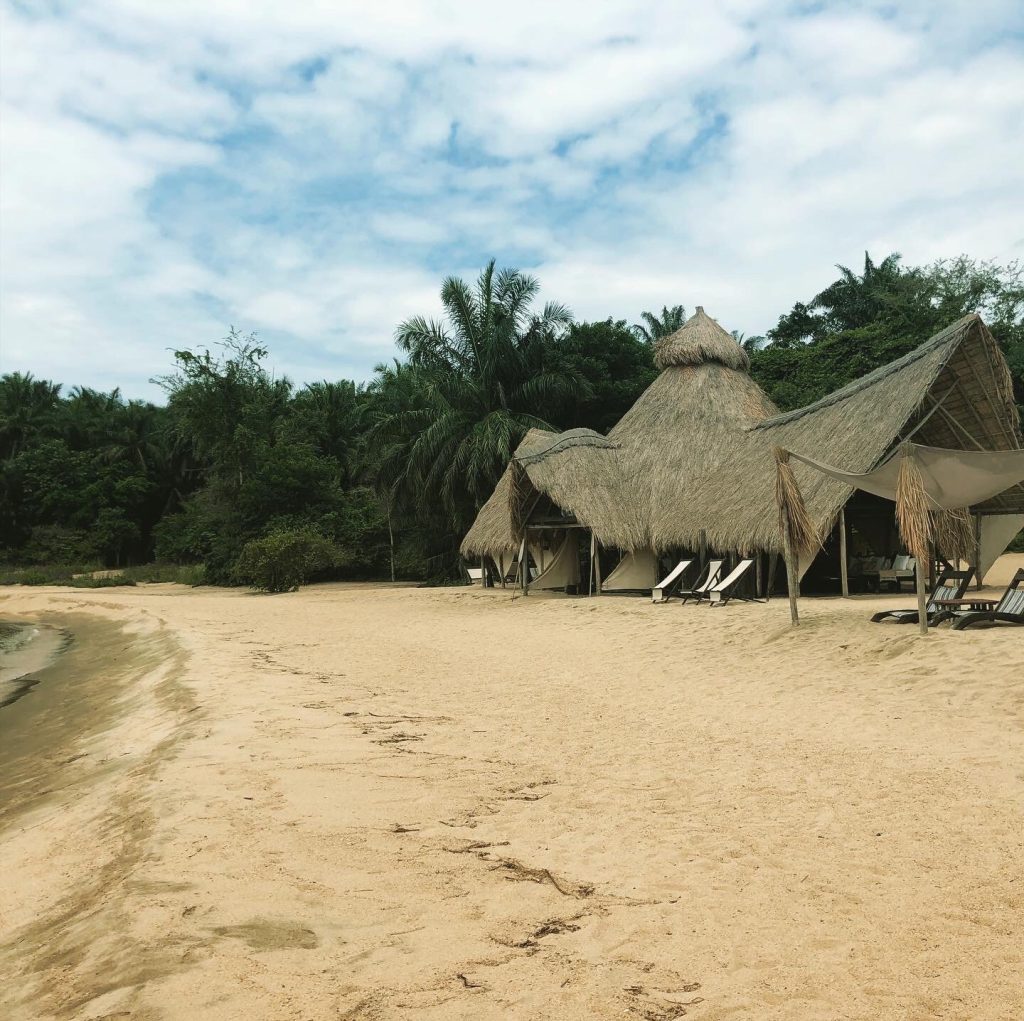
Sandy Beaches in Mahale National Park
The sandy beaches in Mahale National Park are small coves of fine pale sand between rocky headlands along the Lake Tanganyika shoreline, with the two lakeside camps built directly on them and further stretches reachable only by boat. Swimming, snorkelling and sundowners happen here daily on a Mahale safari. Mahale Mountains National Park in western Tanzania has no roads, so the beaches are the only flat ground in the park.
That last point is worth sitting with. Everything else here is mountain. The beaches are a narrow strip between a rainforest slope rising 1,700 metres and a lake dropping 1,470 metres, and there is almost nothing else level in 1,600 square kilometres.
What the Beaches Are Like
Small, is the honest first answer, and the word beach carries assumptions worth correcting.
Rocky headlands break the shoreline every few hundred metres, so what you get is a series of coves rather than a sweep. The sand is fine and pale rather than blinding white, backed immediately by forest that gives shade and drops leaves, with the Mahale range stacked behind. Expert Africa describes the lakeshore here as powder-white sand below imposing forested mountains, which is fair.
The water is fresh, not salt, sitting near 25 degrees Celsius year round and clear enough that you can see your feet standing in it. A few metres out the sand gives way to rock, which is where the fish are.
They face west across open water, straight into the sunset, with the Congolese shore forty to fifty kilometres out and visible on clear days.
Ask your camp where to swim. Bilharzia occurs in shallow, still, weedy parts of the wider lake, though the deep, rocky, well-flushed water along this shore is regarded as low risk and camps swim daily. Hippos hold at some river mouths and crocodiles are recorded but rare here. Following the camp’s stretch handles all of it.
Kangwena Beach and the Camp Shorelines
Two beaches carry the accommodation, and both are properties built onto the sand rather than set back from it.
Kangwena Beach is where Greystoke Mahale sits, with six bandas made of driftwood and canvas. There are no roads within about sixty kilometres and access is by boat from the nearest airstrip, roughly ninety minutes along the shore.
Further along, Mbali Mbali Mahale, formerly Kungwe Beach Lodge, occupies another stretch with ten thatched tents on raised wooden platforms spread beneath the forest canopy. Each has a private deck facing the water, and swimming is possible at all times of day with good snorkelling at the rocky end of the beach.
Between them the shoreline alternates: sand, boulder field, stream mouth, sand again. Boats hop between the two in minutes; walking the same distance takes far longer because of the rock.
The Coves You Reach by Boat
The camps are the only places to stay, but they are not the only beaches.
Along the park shoreline sits a series of small sand pockets between headlands, most nameless on any map and reachable only by water. Camps use them for picnic lunches, swimming stops on a boat safari, and drop-off points for treks when the chimpanzees have ranged away from the main beaches.
Some are twenty metres of sand; others run longer. What they share is that nobody is on them. With fewer than forty beds in the whole park and no road access, an empty beach here is the default rather than an achievement.
Ask your guide to build one into a boat trip. It costs nothing extra on a boat safari already included in your rate, and an hour on a cove with nothing behind it but forest is a different thing from the same hour outside your tent.
The Beach at Park Headquarters
A different kind of shoreline, serving a different kind of visitor.
The headquarters area is where independent travellers arriving from Kigoma stay, in the simple bandas and campsites run by Tanzania National Parks, and where the improved four wheel drive track from the north finally ends.
It works as an operational shoreline rather than a holiday beach: boats coming and going, rangers, supplies. Sand and swimming exist, but you are on the working side of the park.
The trade for anyone travelling this way is clear. You pay a fraction of the camp rates and trek the same forest on the same permit, and your afternoons are considerably less picturesque.
Swimming
Fresh water near 25 degrees year round, straight off the sand, and the best thing about the day after four hours on a humid forest slope.
Snorkelling
Rocky ground a short swim out holds the lake’s endemic cichlids. Masks and fins are included in camp rates. Dry season visibility reaches around twenty metres.
Sundowners and fires
The beaches face west into the sunset. Camps light fires on the sand, and after dark the fishing lamps spread out across the lake.
Kayaks and dhows
Kayaks are included and best at dawn on flat water. Traditional dhows sail this coast for evening trips and transfers.
Wildlife on the Shoreline
The beach is a viewing platform in its own right, and a fair amount turns up without going anywhere.
African fish eagles work the trees at the water’s edge and call constantly. Palm-nut vultures are also common here. Yellow baboons come down onto the rocks at either end of the beaches in the late afternoon to forage, and they are the most reliably visible large mammal in the park. Red colobus, red-tailed monkeys and blue monkeys move through the canopy immediately behind the camps.
Otters use some of the rocky stream outlets where fresh water enters the lake. Those junctions also concentrate herons, waders and kingfishers.
In the dry season, chimpanzees sometimes come down to feed in shoreline fig trees, and guests have watched the M group from a boat sitting a few metres offshore. Not something to plan around, but it happens often enough from August to October to be worth mentioning.
A narrow strip of sand between a rainforest mountain and the second deepest lake on earth. It is the only flat ground for sixty kilometres.
Evenings on the Sand
This is where most of a Mahale trip actually happens, once the trekking is done.
The beaches face west across the widest part of the lake, and sunset falls around six thirty in the evening year round given the proximity to the equator, with a short dusk. Camps light fires on the sand and keep the register plain: driftwood furniture, no music, no crowd.
After dark comes the part nobody expects. Fishing crews put out from villages along the shore in small wooden boats hung with kerosene lamps, and within an hour the dark water carries points of light out to the horizon. It runs all night and is gone by breakfast. In the green season, electrical storms over the lake take its place.
How the Beaches Fit a Mahale Day
Trekking goes out early, when the chimpanzees are active and the forest is cooler. Most guests are back by early afternoon, hot and thoroughly sweaty from several hours on steep humid ground.
The rest of the day belongs to the sand. Swimming, snorkelling, kayaking, a boat safari, or nothing at all with a book. Camps include most of the equipment in their rates, so nothing needs arranging.
Four or five nights works better than three partly for this reason. A rest day here is not a wasted day, and the beach is the reason people come back rather than the reason they come.
Beaches Elsewhere on Lake Tanganyika
For context, since the lake runs 673 kilometres end to end.
Gombe Stream National Park north of Kigoma has a sandy northern shore below its forested valleys, reached by boat from town. Kigoma and neighbouring Ujiji sit on the lake with working waterfronts rather than holiday beaches. Further south, the Zambian shore around Nsumbu National Park has its own coastline.
These are separate trips rather than excursions from Mahale. There is no quick way along this lake.
Best Time for the Beaches and Getting There
June to October gives the calmest, clearest water and the most settled weather, overlapping with the strongest chimpanzee trekking months. Afternoon wind is the main daily variable in any season. November and December bring short rains and storms over the water at night. From March to May the long rains raise lake levels and shift the shoreline, and most camps close. If you want beach time after the forest, our 7 day Mahale chimps and beach safari is built around exactly that.
Access is by air or water only. Scheduled charters run from Arusha on set days in season, typically Mondays and Thursdays, often via Katavi, landing near the boundary followed by a boat transfer of around ninety minutes to the camp beaches. The alternative flies Dar es Salaam to Kigoma in roughly three hours, then continues south by light aircraft or speedboat.
Mahale’s Beaches: Frequently Asked Questions
What does it cost to stay on a beach in Mahale?
Lakeside camp rates start from around US$1,500 per person per night at the premium end, fully inclusive of meals, most drinks, laundry, boat transfers, kayaking, snorkelling equipment, a boat safari and a daily chimpanzee trek. Park charges add roughly US$80 to US$95 per non-resident adult per day depending on VAT treatment and about US$35 per adult per night concession levy, usually folded into camp rates. Park bandas and campsites near headquarters cost a small fraction of that.
Are the beaches private?
In practice, yes. The park holds fewer than forty beds with no road access, so camp beaches see only their own guests and the unnamed coves along the shore usually see nobody. Local fishing boats pass offshore, which is part of the character rather than an intrusion.
Can you walk between the beaches?
Only partly. Rocky headlands break the shoreline every few hundred metres and slow walking considerably, so camps move guests between beaches by boat in minutes. Walking inland from any beach means entering the forest, which requires a guide and an armed ranger.
Is it safe to swim off the beaches?
Camps swim daily and treat this shore as low risk, since the water is deep, rocky and well flushed rather than shallow and weedy. Bilharzia occurs in parts of the wider lake, so follow your camp’s advice on where to go in. Hippos hold at some river mouths and crocodiles are recorded but rare here. Do not swim alone or out into open water.
What is the sand actually like?
Fine and pale, in small coves between rocky headlands, with forest coming down almost to the waterline and mountains rising behind. Beaches are short rather than sweeping. The water is fresh rather than salt, so there is no rinse needed afterwards.
Can you have a beach holiday at Mahale?
Partly, and it is an unusual bonus rather than the point. The beaches are genuinely beautiful and empty, and afternoons here are a real part of the trip, but the park exists for the chimpanzees and the access costs are built around that. Travellers wanting a full beach week commonly add Zanzibar afterwards.
When are the beaches at their best?
June to October, when the lake is calmest and clearest and the weather settled. Mornings are flatter than afternoons in any month. Most camps close from March to May during the long rains, when lake levels rise and the shoreline shifts.
Booking Your Mahale Trip
The safari companies and tour operators listed on this website put trips like this together for a living and know which camps, guides and routes actually deliver. We are an independent guide to Mahale; we do not book or sell tours ourselves.
When you are ready, arrange your safari, tour or holiday with one of the recognised operators listed here. Tell them your dates and what matters most, and a real person, not a form, will handle the itinerary, park bookings and logistics for you.