Sport Fishing in Mahale National Park
Sport fishing in Mahale National Park runs from the lakeside camps as a half day boat activity on Lake Tanganyika, targeting Nile perch and tigerfish, and is charged as an extra rather than included in the standard rate. Catches vary considerably with season and luck. Mahale Mountains National Park in western Tanzania sits on a lake holding more than 250 endemic cichlid species alongside its larger predatory fish.
Nobody flies to Mahale to fish. What sport fishing does is fill an afternoon between trekking mornings with something more purposeful than sitting on the beach, on water that almost nobody fishes recreationally.
What Sport Fishing at Mahale Involves
A boat, a guide who knows where the drop-offs are, and a few hours on the water.
Trips typically run half a day and are arranged through your camp rather than booked in advance. Because they sit outside the inclusive rate at most properties, expect a separate charge and ask for the figure before committing. Tackle is normally provided, though committed anglers sometimes bring their own gear, subject to the light aircraft baggage limits that apply to everything else coming into the park.
Fishing happens along the shoreline and over the deeper water beyond it, since the lake drops away steeply from the beaches. Mornings are calmer than afternoons, and the same wind cycle that governs kayaking governs this.
Camps operate catch and release for the most part, though practice varies, so ask what your camp does before you go out.
Set expectations before you book: this is opportunistic fishing on a lake that is not managed as a sport fishery, guided by camp staff rather than dedicated fishing operators. Catches are unpredictable and blank sessions happen. Treat it as a good way to spend an afternoon on unusual water rather than as a fishing holiday.
What You Are Fishing For
Two names come up consistently in operator descriptions of fishing at Mahale.
Nile perch is the larger target, a substantial predatory fish found across the lake. Tigerfish is the other, a hard-fighting species with a formidable set of teeth that is the reason many anglers come to African fresh water at all.
Beyond those, the lake’s fish community is dominated offshore by sardines and four species of predatory Lates, which together make up the bulk of the biomass in open water. Those sardines are what the commercial night fleets target with their kerosene lamps, and the predatory species follow them.
The famous fish of Lake Tanganyika, the more than 250 cichlid species of which roughly 98 percent are found nowhere else, are not sport fishing targets. Most are small, they live in the shallow rocky habitat, and you meet them with a mask rather than a rod.
The Lake You Are Fishing
Worth a paragraph, because the water itself is the unusual part.
Lake Tanganyika is the world’s longest freshwater lake and the second deepest after Baikal, running roughly 673 kilometres and dropping to 1,470 metres. It is between nine and thirteen million years old, holds around a sixth of the planet’s available surface fresh water, and is described by conservation organisations as the last of Africa’s great lakes still close to its natural state.
Because the water column does not fully turn over, the deepest layers hold no oxygen and no fish. Almost all aquatic life concentrates in roughly the top 180 metres, along the shoreline and over the drop-offs, which is where the fishing happens.
Park material puts the number of fish species in the waters off Mahale at over 90, within a lake total estimated at up to a thousand by some sources.
Fishing Alongside a Working Fishery
This is not empty water, and that context matters.
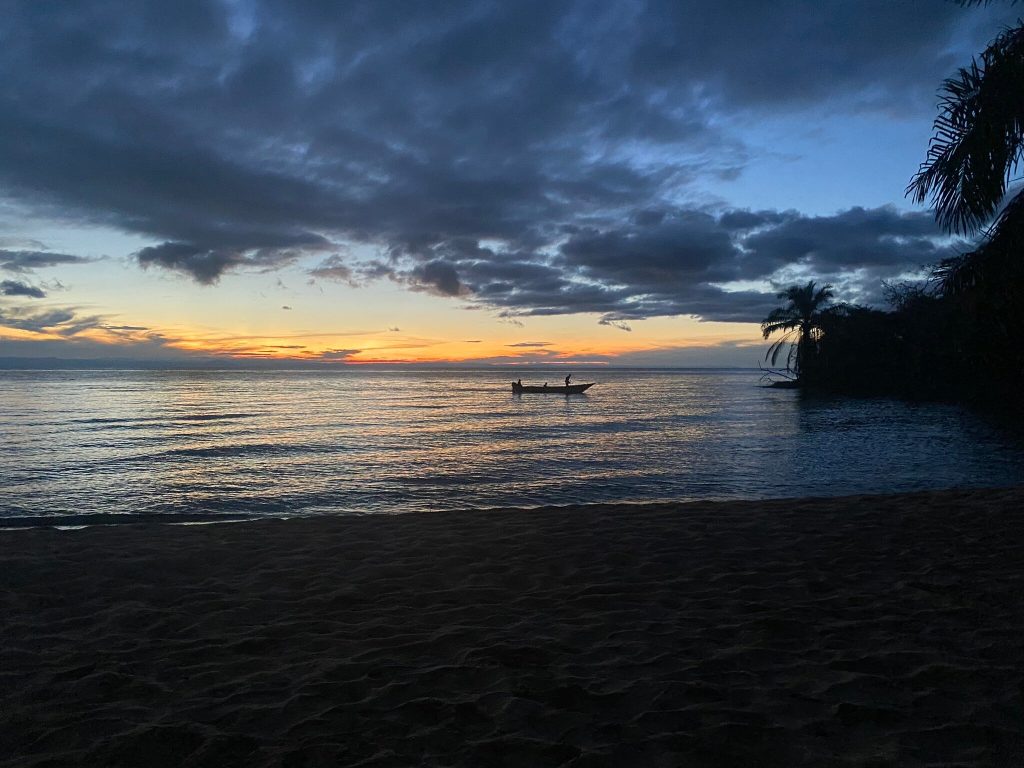
Fishing communities line the shore the whole length of the lake, and for tens of thousands of people it is food supply and income. Crews go out at night in small wooden boats hung with kerosene lamps, drawing sardines towards the light, and from a camp beach after dark the fleet looks like a floating town spread to the horizon.
Pressure on that fishery is a live conservation issue. More than twenty beach management units have been established along this stretch of shoreline under the Tuungane project, run by The Nature Conservancy with Pathfinder International and partners including Frankfurt Zoological Society and Tanzania National Parks, aimed at improving yields and taking pressure off the forests behind.
Recreational fishing here sits alongside all of that rather than in a bubble, which is a reasonable argument for catch and release and for following whatever your camp’s practice is without pushing against it.
Half day boat trip
The standard offering. Guide, boat, tackle provided, along the shoreline and over the drop-offs. Charged as an extra at most camps.
Target species
Nile perch and tigerfish are the names operators cite. Offshore the biomass is sardines and predatory Lates species.
Best conditions
Morning, before the wind gets up. Dry season from June to October gives the settled water, overlapping with peak chimpanzee trekking.
What it is not
A managed sport fishery with specialist guides. Expect opportunistic fishing on a remote lake, with blank sessions a real possibility.
How Fishing Fits Into a Mahale Trip
Days here follow a fixed shape, and fishing goes in the same slot as everything else on the water.
Chimpanzee trekking runs early, when the apes are active and the forest is cooler, and most guests are back by early afternoon after several hours on steep humid ground. The rest of the day belongs to the lake: swimming, snorkelling, kayaking, a boat safari, or fishing if you have arranged it.
Because fishing is a half day activity and the mornings are usually spoken for by trekking, it works best on a rest day. That is a practical argument for four or five nights rather than three, particularly since the charter flights dominate the cost of reaching Mahale and extra nights are proportionally cheap.
Anglers who want more than one session should say so when booking rather than on arrival.
You are fishing a nine million year old rift lake below a rainforest mountain, with a fleet of lamp-lit boats due out after dark. The fish are almost secondary.
Tackle, Gear and What to Bring
Camps provide tackle for guests taking a trip, so most people bring nothing.
Anglers with strong preferences sometimes travel with their own rods and terminal tackle, and that is worth weighing against the baggage limits. Light aircraft serving Mahale enforce allowances well below commercial flights and require soft bags rather than hard cases, so confirm your allowance before packing a rod tube.
Otherwise the usual boat kit applies: sun protection, a hat, polarised sunglasses, a long-sleeved layer, and water. Sun on open water is stronger than it feels, and there is no shade on a fishing boat.
A dry bag for anything electronic is sensible, since boats on this lake take spray in every season.
Rules and Permits
Fishing inside a national park is subject to park rules, and your camp handles the arrangements.
Trips are guided rather than independent, and you do not simply take a boat out yourself. Whether catch and release is required or expected varies, so ask directly. Tanzania National Parks regulations govern activity inside the boundary, and camps operate within them as a condition of their concessions.
The standard park charges apply regardless of what you do with your day: a conservation fee per person per day and an overnight levy per night inside the park. Figures appear in the FAQ below.
Best Time for Sport Fishing at Mahale
June to October gives the settled weather and calmest water, which makes any boat activity more pleasant and overlaps with the strongest chimpanzee trekking months. Mornings are flatter than afternoons in any season, since wind commonly gets up through the day.
November to February brings the short rains and the drier gap after them, with more variable conditions and fewer visitors. Most camps close from March to May during the long rains, taking the fishing with them along with everything else. Our 5 day Mahale and Lake Tanganyika safari gives the lake side of the park proper time rather than an afternoon.
Catch rates through the year are not well documented for recreational fishing here, which is itself a fair indication of how little of it happens.
Getting to Mahale
Access is by air or water only, since the park has no roads. Scheduled charters run from Arusha and the northern circuit on set days in season, typically Mondays and Thursdays, often calling at Katavi, landing at an airstrip near the boundary followed by a boat transfer of around ninety minutes to the camp beaches.
The alternative flies Dar es Salaam to Kigoma in roughly three hours, then continues south by light aircraft in forty five minutes or by speedboat in four to six hours.
Sport Fishing at Mahale: Frequently Asked Questions
How much does sport fishing cost at Mahale?
It sits outside the inclusive camp rate at most properties and is quoted as an extra, usually on a half day basis, so ask your camp for the figure when booking. The camps themselves are fully inclusive from around US$1,500 per person per night at the premium end, covering meals, transfers, kayaking, snorkelling, a boat safari and a daily chimpanzee trek. Park charges add roughly US$80 to US$95 per non-resident adult per day depending on VAT treatment and about US$35 per adult per night concession levy.
What fish can you catch in Lake Tanganyika at Mahale?
Nile perch and tigerfish are the species operators cite for sport fishing. Offshore, the lake’s biomass is dominated by sardines and four species of predatory Lates. The lake’s famous cichlids, over 250 described species with roughly 98 percent found nowhere else, are small shallow-water fish that you see while snorkelling rather than catch.
Is tackle provided?
Normally yes, by the camp running the trip. Anglers with strong preferences sometimes bring their own, though light aircraft baggage limits are lower than commercial flights and soft bags are required, so check your allowance before packing a rod tube.
Is fishing catch and release?
Practice varies between camps, so ask directly before you go out. Given the pressure on Lake Tanganyika’s commercial fishery and the conservation work underway across the Greater Mahale Ecosystem, catch and release is the sensible default whatever the camp’s stated policy.
Is Mahale a good fishing destination?
Not as a primary reason to travel. This is opportunistic fishing guided by camp staff rather than a managed sport fishery with specialist operators, and blank sessions happen. What it offers is a few hours on unusual water in a park almost nobody fishes recreationally. Come for the chimpanzees and treat the fishing as a bonus.
When is the best time to fish at Mahale?
Mornings, before the wind gets up, and seasonally from June to October when conditions are most settled. Most camps close from March to May during the long rains. Because trekking occupies most mornings, fishing usually works best on a rest day, which is an argument for staying four or five nights.
Can I fish independently from the beach?
No. Activities inside the national park are guided and arranged through your camp under Tanzania National Parks regulations. You do not take a boat out or fish unaccompanied, in the same way that nobody walks in the forest without a guide and an armed ranger.
Booking Your Mahale Trip
The safari companies and tour operators listed on this website put trips like this together for a living and know which camps, guides and routes actually deliver. We are an independent guide to Mahale; we do not book or sell tours ourselves.
When you are ready, arrange your safari, tour or holiday with one of the recognised operators listed here. Tell them your dates and what matters most, and a real person, not a form, will handle the itinerary, park bookings and logistics for you.