Which Other Wildlife Can Be Seen in Mahale?
Beyond the chimpanzees, Mahale holds lions, leopard, buffalo, elephant, roan and sable antelope, bushpig, blue duiker, bushbuck, giant squirrel, porcupine, mongoose and over 300 bird species, though most are seen occasionally rather than reliably. Visitors come across them on forest walks and boat trips during a Mahale safari. Mahale Mountains National Park in western Tanzania spans rainforest, woodland, bamboo and grassland, which is why its species list is so mixed.
Set expectations first. This is not a game viewing park. There are no vehicles, no open plains to scan and no waterholes to sit at, and the forest is thick enough that most animals hear you long before you see them.
Lions and Leopard in the Mahale Grasslands
Mahale is regularly described as the only place in Africa where chimpanzees and lions share a forest, and researchers documented lions killing chimpanzees here in 1989, which is not a predator any other chimpanzee study site has to account for.
Lions live in the park’s limited grassland sectors rather than the rainforest slopes visitors trek. Sightings by tourists are rare, and nobody should book a Mahale trip hoping for one. What the presence does explain is the armed ranger who accompanies every walking party, which is a working precaution rather than theatre.
Leopard occur too and are, as everywhere, mostly invisible. Guides pick up tracks and occasionally calls. Seeing one would be a considerable piece of luck.
The honest framing: Mahale’s large mammals are on the species list rather than on the itinerary. If big cats and herds are what you want, pair Mahale with Katavi, which sits on the same flight rotation and delivers exactly that. Come here for forest, primates and the lake.
Buffalo, Elephant and the Savanna Species
The drier eastern flank of the range, beyond the ridge, turns to miombo woodland and grassland, and that is where the savanna component of the park’s fauna lives.
Buffalo range through the grassland and are one of the reasons walking parties stay together. Elephant occur in the wider ecosystem, and conservation organisations describe the Mahale mountains as the one place chimpanzees and savanna elephants are found together. Roan and sable antelope, both handsome and both scarce across much of their range, live in the drier woodland.
Visitors rarely reach this side of the park. The trekking routes, the camps and the trails all sit on the western face, so these species are part of what makes the park biologically unusual rather than part of what you will see in three nights.
Forest Mammals on a Mahale Walking Safari
The animals you actually meet on a guided forest walk are smaller and quicker.
Bushpig root through the valley floors. Blue duiker and bushbuck use the same ground and vanish at speed. Giant squirrel and red-legged sun squirrel work the canopy and are common enough to be a regular sighting. Brush-tailed porcupine and bushy-tailed mongoose are both recorded, though the porcupine is nocturnal and mostly known from quills on the trail.
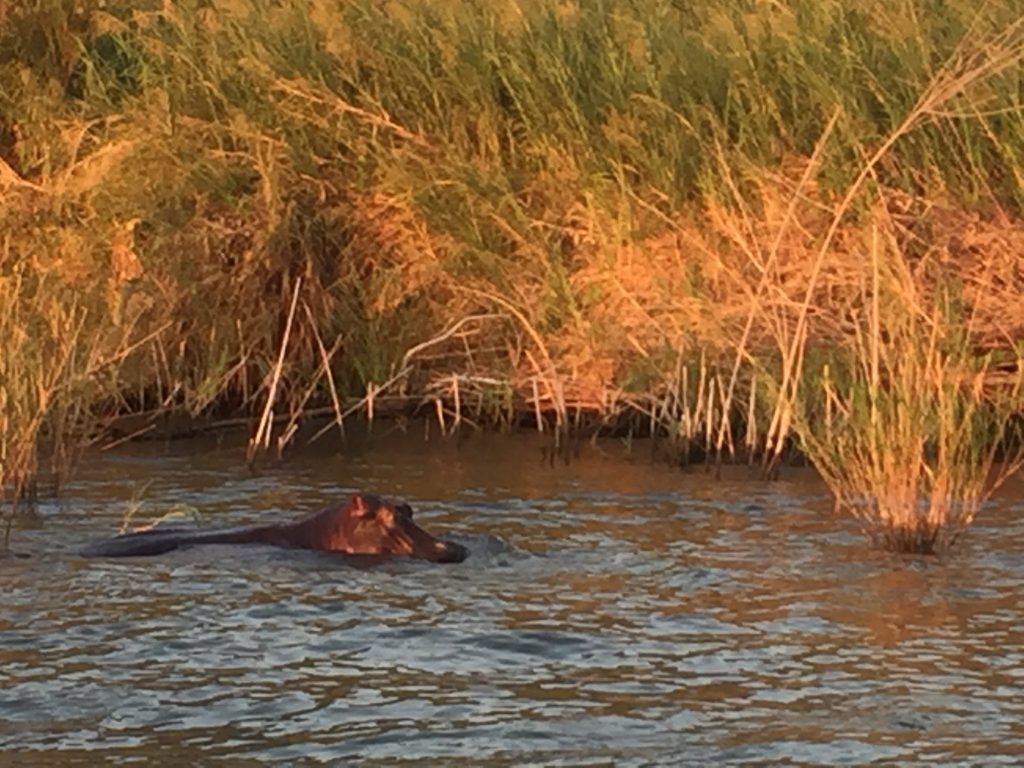
Otters use some of the rocky stream outlets where fresh water meets the lake, which is a reliable spot to pause on a boat safari. Crocodiles are recorded in the park but described as rare on this shoreline, and hippos hold at a few river mouths.
Most of these are glimpses rather than viewings. A guide who calls the species from a rustle and a flash of rump is doing their job well.
Seen most days
Yellow baboons on the beaches and rocks, red-tailed and blue monkeys in the canopy, giant squirrels, fish eagles along the shoreline. No effort required beyond being outside.
Regular with a guide
Red colobus and Angolan black and white colobus, forest birds, butterflies at stream crossings, bushbuck and duiker glimpsed on valley trails.
Occasional
Otters at stream mouths, hippos at river outlets, bushpig, mongoose, porcupine sign. Present but unpredictable.
Rare
Lions, leopard, buffalo, elephant, roan and sable antelope, crocodile. On the park list, seldom on a visitor’s list.
Birdlife Across the Park’s Habitats
Mahale records well over 300 bird species, with Tanzania National Parks citing at least 337, including species that are rare elsewhere and Albertine Rift specials that most Tanzanian itineraries never reach.
Pel’s fishing owl is the name that appears most often on park material, and it is the kind of bird that draws people this far west on its own. Along the shoreline you get fish eagles calling constantly, kingfishers, herons and waders where the streams come in. Inside the forest the mix shifts to greenbuls, illadopsis, robin-chats, hornbills and turacos, with sunbirds working flowering trees in the light gaps.
Timing runs opposite to the chimpanzee calendar. November through February is the stronger birding period, with migrants present and residents breeding and calling, at the cost of wetter trails and longer treks. Dry season birding remains productive around water sources and along the shore, with easier walking and better light through thinner foliage.
Butterflies and the Small Life of the Forest Floor
Butterflies are one of the genuine pleasures of walking here and are easy to overlook in a park sold on apes.
Damp sand at stream crossings draws mud-puddling congregations that lift in clouds when a walking party steps through, and light gaps along the watercourses hold constant traffic. Park material lists butterflies among Mahale’s attractions alongside the birds, which is unusual and deserved.
Down at ground level there are also ants, and they matter more than they sound. The arboreal ant nests that M group chimpanzees fish with stripped stems are the basis of one of the behaviours Mahale is known for in the research literature, and guides will point out the tool marks even when the chimps are elsewhere.
The park’s most famous animal behaviour involves a stick and an ants’ nest. Not everything worth seeing here is large.
Fish and Aquatic Life in Lake Tanganyika
The lake counts as wildlife too, and it is the most reliable viewing in the park.
Lake Tanganyika holds more than 250 described cichlid species with roughly 98 percent found nowhere else, plus around 75 non-cichlid species of which about 60 percent are also endemic. Some park material puts the fish count in the lake waters off Mahale at over 90 species.
Snorkelling straight off the camp beaches puts you over the shallow rocky habitat where the small colourful ones live: shell dwellers in beds of empty snail shells, rock-grazing Tropheus, gobies in crevices. Water sits near 25 degrees Celsius year round and dry season visibility can reach around twenty metres. Offshore, sardines and predatory Lates dominate the biomass and are what the night fishing fleets target.
Why Mahale’s Species Mix Is Unusual
The reason this park carries such an odd list comes down to where it sits.
The researcher Hiroshi Ihobe described Mahale’s fauna as including both savanna-adapted species of eastern and southern Africa and forest-adapted species of western and central Africa and the Congo basin. Two faunal worlds overlap here, which is why roan antelope and red colobus occur inside the same boundary.
The habitat mosaic does the rest. Rainforest, montane forest, alpine bamboo, woodland and mountain grassland stack across less than 1,700 metres of vertical distance from the lake to the summit of Mount Nkungwe at roughly 2,462 metres. Frankfurt Zoological Society counts ten primate species in the park, and the wider Greater Mahale Ecosystem forms part of the Eastern Afromontane biodiversity hotspot.
Where and When to Look for Mahale’s Wildlife
Altitude and time of day sort most of it.
Lakeshore and lower valley forest hold the primates, the small forest mammals and most of the walk-in sightings. Shoreline rocks and stream mouths are for baboons, otters, fish eagles and kingfishers, best in the late afternoon. Montane forest higher up belongs to the black and white colobus. The grassland beyond the ridge holds the large mammals and is not on the visitor circuit.
Mornings are best for almost everything, which is when treks and walks go out. Afternoons suit boat safaris along the shore, when animals come down to the water and the light softens.
Best Time and Getting to Mahale
June to October gives the easiest walking, thinner undergrowth and better forest visibility, along with the strongest chimpanzee sightings. November to February suits birders best. Most camps close from March to May during the long rains and the scheduled flights stop with them.
Access is by air or water only. Scheduled charters run from Arusha on set days in season, typically Mondays and Thursdays, often via Katavi, landing near the park boundary with a boat transfer of around ninety minutes. The alternative flies Dar es Salaam to Kigoma in roughly three hours, then continues south by light aircraft in forty five minutes or by speedboat in four to six hours. Our 12 day chimps, plains and crater safari is the long version, forest, plains and crater in one run.
Mahale Wildlife: Frequently Asked Questions
What does a wildlife-focused trip to Mahale cost?
Lakeside camps are fully inclusive from around US$1,500 per person per night at the premium end, covering meals, most drinks, transfers, kayaking, snorkelling, a boat safari and a daily chimpanzee trek. Park charges add roughly US$80 to US$95 per non-resident adult per day depending on VAT treatment and about US$35 per adult per night concession levy, with the chimpanzee trekking permit at around US$150 per person. Guided forest walks for other wildlife are normally included in camp rates.
Can you see the Big Five in Mahale?
No. Lions, leopard, buffalo and elephant all occur in the park or the wider ecosystem, but sightings are rare and there is no rhino population. There are no roads and no game drives, so viewing large mammals is not what this park does. Travellers who want that should add Katavi, which sits on the same flight rotation.
Is it true that lions live alongside chimpanzees at Mahale?
Yes. Lions occupy the park’s grassland areas and were documented as a predator of chimpanzees here in 1989, which makes Mahale unusual among chimpanzee sites. Visitors very rarely see them, since the trekking routes are on the forested western slopes rather than in the grassland. The armed ranger on every walk relates to this and to buffalo.
How many bird species are recorded in Mahale?
Over 300, with Tanzania National Parks citing at least 337, including Albertine Rift specials and rare species such as Pel’s fishing owl. Shoreline birding produces fish eagles, kingfishers and herons; forest birding produces greenbuls, hornbills, turacos and sunbirds. The strongest months are November to February when migrants are present.
Are there dangerous animals to worry about on the trails?
Buffalo are the main reason for the armed ranger escort, with lions and elephant also present in parts of the park. Crocodiles are recorded but rare on this shoreline, and hippos hold at some river mouths, which is why camps direct guests to specific swimming spots. Following your guide’s instructions covers all of it.
Can you see wildlife from a boat at Mahale?
Yes, and the afternoon boat safari is one of the better viewing opportunities in the park. Fish eagles, baboons on the rocks, hippos at river mouths and otters at stream outlets are all regular. In the dry season a boat can occasionally put you level with chimpanzees feeding in shoreline fig trees.
When is the best time for general wildlife watching in Mahale?
June to October for easier walking, thinner undergrowth and better forest visibility. November to February for birds and butterflies, at the cost of wetter, longer treks. Most camps close from March to May during the long rains.
Booking Your Mahale Trip
The safari companies and tour operators listed on this website put trips like this together for a living and know which camps, guides and routes actually deliver. We are an independent guide to Mahale; we do not book or sell tours ourselves.
When you are ready, arrange your safari, tour or holiday with one of the recognised operators listed here. Tell them your dates and what matters most, and a real person, not a form, will handle the itinerary, park bookings and logistics for you.